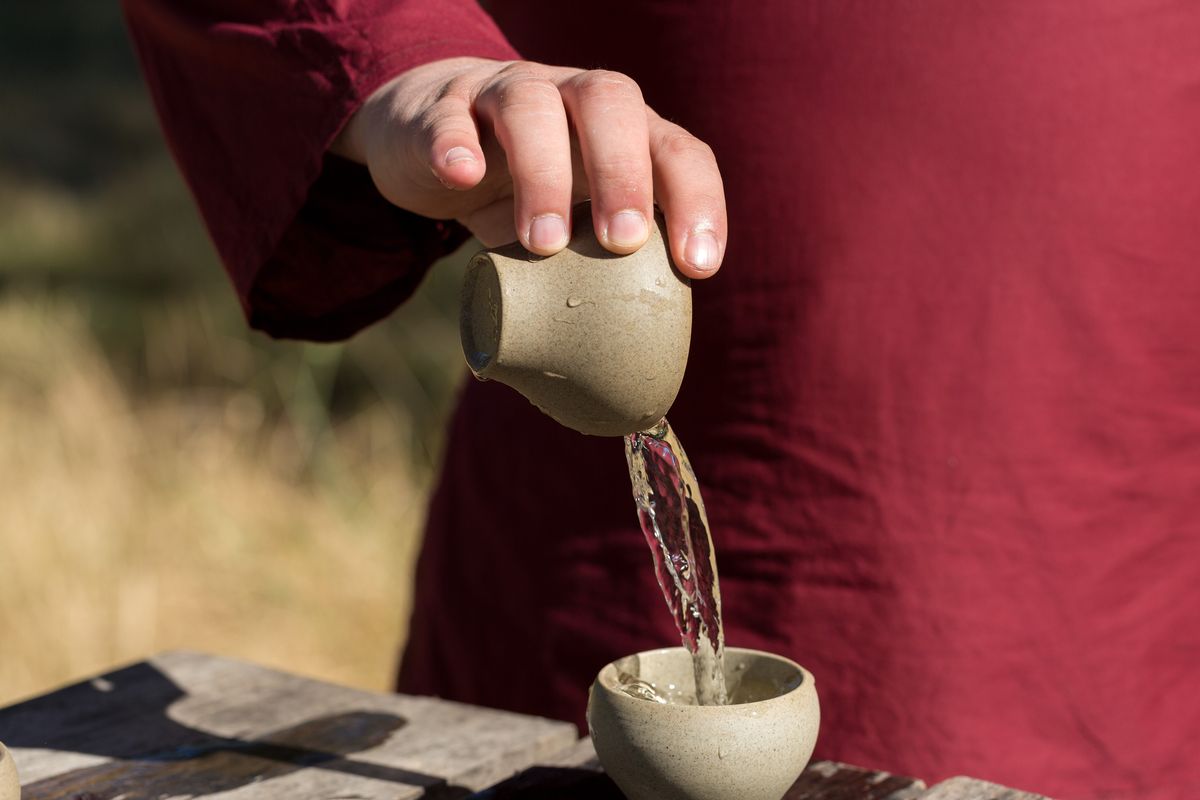
Making Tea With Attention: A Ceremony for One
You do not need a bamboo tray or a silent room. You need ten minutes, a quiet corner, and the willingness to do one thing at a time.
You do not need a bamboo tray. You do not need a hand-thrown clay teapot or a silent room with a calligraphy scroll on the wall. You do not need incense, a timer, or a meditation cushion.
You need ten minutes. A quiet corner. And the willingness to do one thing at a time.
That is the entire ceremony.
The core of it is this: make tea, and while you are making it, only make tea. Do not also plan dinner. Do not check the news on your phone. Do not rehearse tomorrow's meeting in your head while your hands go through the motions.
Just water. Leaves. Hands. Heat.
That is hard enough.
If you have ever tried to do one single thing for ten uninterrupted minutes without your mind wandering to something else, you already know. It is one of the simplest things in the world, and one of the most difficult. Which is exactly why it works.
What "Ceremony" Means Here
Let's be clear about what we are not talking about.
We are not talking about the Japanese tea ceremony — chanoyu — with its centuries of codified movement, its specific bowls, its tatami rooms, its years of training. That is a beautiful tradition, and it is not what this page is about.
We are not talking about performance. Not about doing it right in front of an audience, real or imagined. Not about aesthetics for a photograph. Not about becoming a tea person with the correct opinions about water temperature and steep times.
A ceremony for one is simpler than all of that. It means giving complete attention to a simple act. That is it.
If you can make tea with full attention for ten minutes — really full attention, where your mind does not leave the room — you have practiced something most people never do in an ordinary day. You have been entirely present for a small, unremarkable stretch of time. And that small stretch changes the texture of everything that follows.
There is an old Taoist observation that the sage does not do extraordinary things. The sage does ordinary things with extraordinary attention. Making tea is about as ordinary as it gets. Which makes it the perfect place to practice.
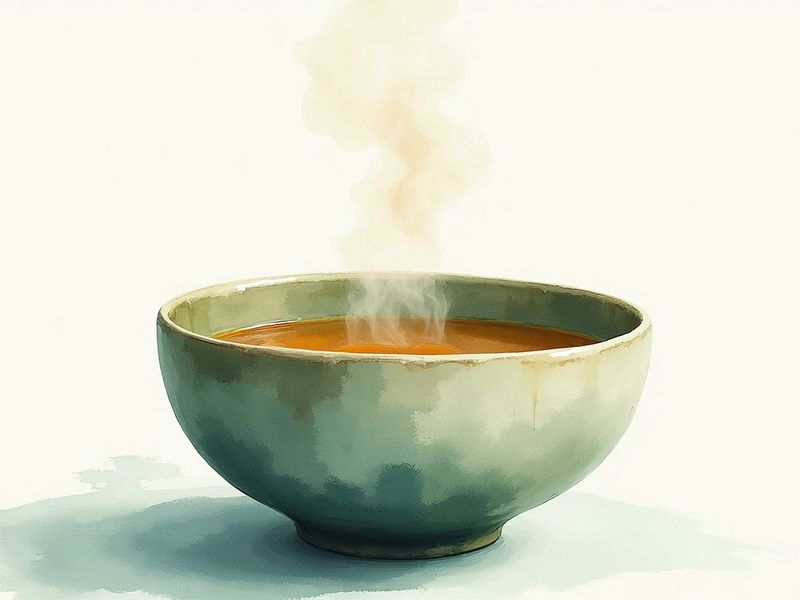
The Steps
This is not a recipe. It is a guided experience. Read through it once, then do it. The doing is the point.
Heat the Water
Fill the kettle. Turn it on. And then — here is the part that will feel strange — stay.
Do not walk away. Do not pick up your phone while you wait. Stand near the kettle and listen.
You will hear the first murmur. A quiet hissing as tiny bubbles form on the bottom. Then the sound shifts — a steady rumble as the bubbles rise. Then, if you let it go all the way, the rolling boil. A full, open, tumbling sound.
You have heard a kettle boil a thousand times. You have probably never heard it once. Not like this. Not with your full attention, noticing the stages, the way the pitch changes, the way steam begins to curl from the spout before the switch clicks.
This is the first lesson. Familiar is not the same as known.
Warm the Vessel
Pour a little hot water into your cup or teapot. Swirl it around. Pour it out.
This step has a practical purpose — it keeps the brewing temperature steady. But it has another purpose too. It is a slow beginning. A way of saying: we are not rushing this. We are preparing the vessel before we ask it to hold something.
You are the vessel too. This step prepares you.
Add the Leaves
Put the tea in. But before you pour water over it, pause.
Look at the leaves dry. Notice their shape — tightly rolled, flat and broad, twisted, broken into small pieces. Every tea looks different before water touches it. This is the "before."
Smell them. Bring the cup or pot to your nose and inhale. Dry tea has a different scent than steeped tea — sometimes sweeter, sometimes more vegetal, sometimes like nothing at all until the heat opens it up.
You are meeting the tea before the transformation. Most people skip this entirely. They pour and scroll. You are not going to do that today.
Pour
Now the water meets the leaves.
Watch. This is fifteen seconds of pure visual information, and it is beautiful if you let it be.
The color begins to change — slowly at first, then faster. The leaves start to open, to unfurl, to release what they have been holding. Steam rises from the surface in patterns that never repeat. The water moves the leaves gently, a small current in a small vessel.
You do not need to narrate this in your head. You do not need to think about it. Just watch. Your eyes are enough.
Wait
This is the hardest step.
Not the waiting itself. You wait for things all day long — in traffic, in lines, on hold, for replies. You are an expert at waiting.
The hard part is the not-filling-it-with-something-else.
Your hand will want to reach for your phone. Your mind will want to jump ahead to drinking, or back to something from this morning, or sideways to a problem you have been chewing on. Let it jump. Notice the jump. Then come back to the cup.
This is not meditation. You do not need to achieve a blank mind. You just need to keep returning your attention to what is happening right here — water, heat, leaves, time passing. Every time your mind leaves and you bring it back, that is the practice. The wandering is not failure. The returning is the whole thing.
Pour and Drink
Pour the tea. If you are using a small pot or gaiwan, pour it all out — do not let the leaves keep steeping.
Now drink.
The first sip is a meeting. You and the tea, right now, this particular cup that has never existed before and will never exist again. Let it sit on your tongue for a moment before you swallow. Notice what you notice — sweetness, bitterness, astringency, warmth, something floral, something earthy, something you do not have a word for.
You do not need to be a sommelier. You do not need tasting notes. You just need your mouth and your attention.
Repeat
If your tea allows multiple infusions — and most oolongs, pu-erhs, and white teas do — pour a second round. And a third.
Each infusion will be different. The first might be light and tentative. The second, fuller. The third might reveal something that was hiding — a sweetness that was not there before, a depth that needed time.
This is the lesson of patience. The tea does not give you everything at once. It unfolds. And each round asks you to stay present for a slightly different experience, even though you are doing exactly the same thing.
End
When the tea is done, it is done.
Do not try to squeeze one more steep from exhausted leaves. Do not extend the ceremony past its natural finish. The ending is part of the practice.
Rinse your cup. Put things away. And then do the next thing — whatever it is — carrying the quality of attention you just practiced into the rest of your day.
The ceremony is over. The attention does not have to be.
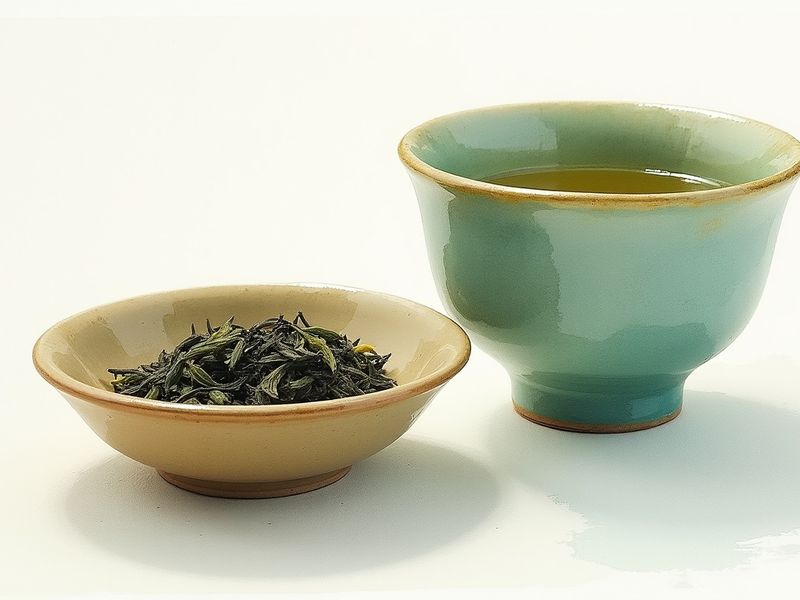
The Point Is Not Perfect Technique
There are excellent guides to water temperature, steep times, leaf-to-water ratios, and the specific properties of every tea varietal. The tea guide covers those details. This page is not about that.
This page is about being present for whatever happens.
You will overstep sometimes. That is data — the tea tells you it was too long by becoming bitter, and now you know. You will burn your tongue. That is also data — you were not paying attention, you were already ahead of yourself, wanting the drinking before the cooling.
None of these are mistakes. They are the practice working.
The Taoist concept of wu wei — effortless action — is not about getting the technique right. It is about stopping the forcing. You do not force a spiritual experience out of a cup of tea. You do not sit there trying to feel peaceful, manufacturing tranquility, performing calm for an audience of one.
You just make tea. And you notice what happens when you make tea without doing anything else.
Sometimes it feels profound. Sometimes it feels like nothing — just a person drinking tea in a kitchen. Both are fine. The ordinary does not need to reveal itself as extraordinary every time. Most of the time it is just ordinary. That is the deeper teaching, the one that takes years to actually accept: ordinary is enough.
The Equipment You Actually Need
A cup. Any cup. The one you already have.
Hot water.
Tea. Any tea. A bag from the grocery store works. Loose leaf works. The five-dollar tin from the back of your cupboard works.
That is the complete equipment list.
If you want to go further, a small teapot allows multiple infusions. A gaiwan — a lidded bowl used across China — is designed for exactly this kind of attentive brewing. A tea tray catches the spills and gives you a dedicated space.
These are nice to have. They are not necessary. The idea that you need special equipment before you can have a meaningful experience with tea is one of the barriers that keeps people from starting. You do not need to buy anything. You need to pay attention with what you already own.
The most important piece of equipment is your attention. Everything else is optional. If you want to explore creating a dedicated space for this practice, setting up a tea space covers the practical details.
Making It Yours: Morning, Afternoon, Evening
This practice does not need to happen daily. Once a week is a practice. Once a month is a reminder. The frequency matters less than the quality of attention when you do it.
But if you want to experiment with different times, the tea you choose can match the energy of the hour.
Morning. Your body is waking up. Energy is rising. A green tea or matcha supports that upward, activating quality. The ceremony becomes a way of crossing the threshold between sleep and waking — a deliberate beginning rather than a stumble toward caffeine.
Afternoon. The day has a shape by now. You are in the middle of things. An oolong or white tea meets you there — neither pushing you forward nor pulling you back. Neutral. Centering. A pause between the two halves of your day.
Evening. Things are winding down, or they should be. A caffeine-free option — chamomile, rooibos, a reishi blend — signals to your body that the day is ending. The ceremony becomes a closing rather than an opening. A way of setting things down before sleep.
These are suggestions, not rules. Drink whatever you want. The tea is the vehicle. The attention is the destination.
In Traditional Chinese Medicine, the state you are in when you eat or drink affects how your body receives what you consume. This is not a metaphor. When you eat or drink in a rushed, distracted, or agitated state, the spleen qi — responsible for transforming food and liquid into usable energy — scatters. Digestion becomes less efficient. Nutrients are less fully absorbed. The body gets the substance but misses some of the benefit.
When you consume in a calm, settled state, spleen qi is supported. The stomach receives what comes in with its full capacity. Absorption improves. The medicine in the tea — whether it is the antioxidants in green tea, the warming properties of ginger, or the calming quality of chamomile — reaches deeper because the container is ready.
This is what the ceremony does before you take a single sip. It settles you. It moves you from scattered to collected, from doing-five-things to doing-one-thing. By the time the tea reaches your stomach, you are in a state of calm receptivity. The container amplifies the medicine. The ritual is not separate from the healing — it is the first step of it.
Tea as a Doorway
There is nothing magical about tea. Coffee could work. A glass of water could work. Any simple, repeatable act could become this kind of practice.
But tea has something that most other beverages do not: it asks you to wait. Coffee brews in a machine. Water pours from a tap. Tea requires a small window of time between preparation and consumption — and that window is where the practice lives.
The traditions around tea across cultures — Chinese gongfu, Japanese chanoyu, Moroccan mint tea, British afternoon tea — all share one thing beneath their vast differences. They slow you down. They insert a pause into the day. They take something that could be purely functional and make it relational — a relationship between you and the act, between you and the moment, between you and whoever you are sharing it with, even if that person is only yourself.
You do not need to adopt someone else's tradition. You can build your own. A micro-ritual as small as three minutes with a cup and your full attention is enough to interrupt the momentum of a distracted day.
And if you want to explore pairing tea with simple food — the way a plain biscuit or a piece of dark chocolate can deepen the experience — tea and food pairing is a natural next step.
Every contemplative tradition has its version of this. One simple act. Total attention. A doorway into presence. The Zen monk sweeps the monastery floor. The Christian mystic kneads bread. The Sufi turns. The yogi sits. The Taoist makes tea.
The act does not matter. What matters is the quality of attention brought to it. And here is the part that most people get backwards: you are not performing the ritual in order to become present. You are already present — the ritual simply proves it. The tea ceremony does not create peace. It reveals the peace that was there before you started rushing.
The Tao Te Ching says the Tao is found in the ordinary. Not above it. Not beyond it. In it. In water and wood and leaves and heat and the sound of a kettle and the patience of waiting and the simple act of bringing a cup to your lips. The sacred is not hiding in a temple. It is hiding in your kitchen, in plain sight, waiting for you to slow down enough to see it.
The next time you make tea, try it this way. Not as a project. Not as self-improvement. Just as an experiment.
Ten minutes. One cup. Your full attention.
Notice what happens when you do one thing at a time — just one thing, all the way through, without splitting yourself across three screens and four concerns. Notice how long ten minutes actually lasts when you are not trying to get through it.
The tea will taste different. Not because the tea changed. Because you did.
That is the whole ceremony. That is the whole point. You do not need to go anywhere to find conscious living. You just need to stop leaving where you already are.