The word "ritual" makes you cringe a little. Candles and chanting and too many crystals. You are practical. You do not need rituals.
Except you already have them.
The order you get ready in the morning. Phone check before feet hit the floor. The specific mug you reach for, every time. The way you always listen to the same playlist on the commute, the scroll through social media before bed.
Those are rituals. Just not chosen ones.
The question is not whether you have rituals — it is whether the ones you have are making your life better or worse.
You Already Have Rituals (They Are Just Unconscious)
Think about your morning. You probably do the same things, in roughly the same order, almost every day. Alarm. Phone. Bathroom. Coffee. Maybe in a different sequence, but your sequence. You did not design it. It designed itself through repetition.
Now think about what makes something a ritual instead of just a habit. Three elements: it is repeated, it engages the senses, and it marks a transition. Your morning coffee hits all three. Same mug, same warmth in your hands, same smell, and it marks the boundary between asleep and awake.
Your bedtime scroll does too. Same position, same blue glow, same numbing feeling — and it marks the boundary between your day and sleep. It is a ritual. Just not a good one.
This reframe matters. You are not being asked to add rituals to an already crowded life. You are being asked to upgrade the ones you already have. The slot is already there. The question is what you are filling it with.
The Neuroscience of Why Rituals Work
Your brain loves predictable sequences. When it recognizes a pattern — the same actions in the same order — it offloads the processing. Cognitive load drops. You stop thinking about what to do next, and something deeper takes over.
This is why you can drive your usual route on autopilot but feel exhausted navigating a new city. Familiar sequences free up mental bandwidth. A ritual does the same thing, but on purpose.
Rituals also act as transition signals. Your brain struggles with ambiguity — am I working or resting? Am I done or not done? A ritual draws a line. The act of closing the laptop, making tea, and sitting in a particular chair tells your nervous system: that part is over. This part begins.
There is a physiological layer too. Slow, sensory, repeated actions activate the parasympathetic nervous system — the part responsible for rest and recovery. Feeling the warmth of a cup, smelling the steam, moving through familiar steps at an unhurried pace. This is not mystical. It is a downshift. Your body knows how to do it. It just needs the cue.
Psychologists call this an implementation intention: "when X happens, I do Y." It turns out that these if-then patterns are remarkably effective at shaping behavior. Not because they require willpower, but because they remove the decision. The ritual decides for you.
The Behavioral Psychology Layer
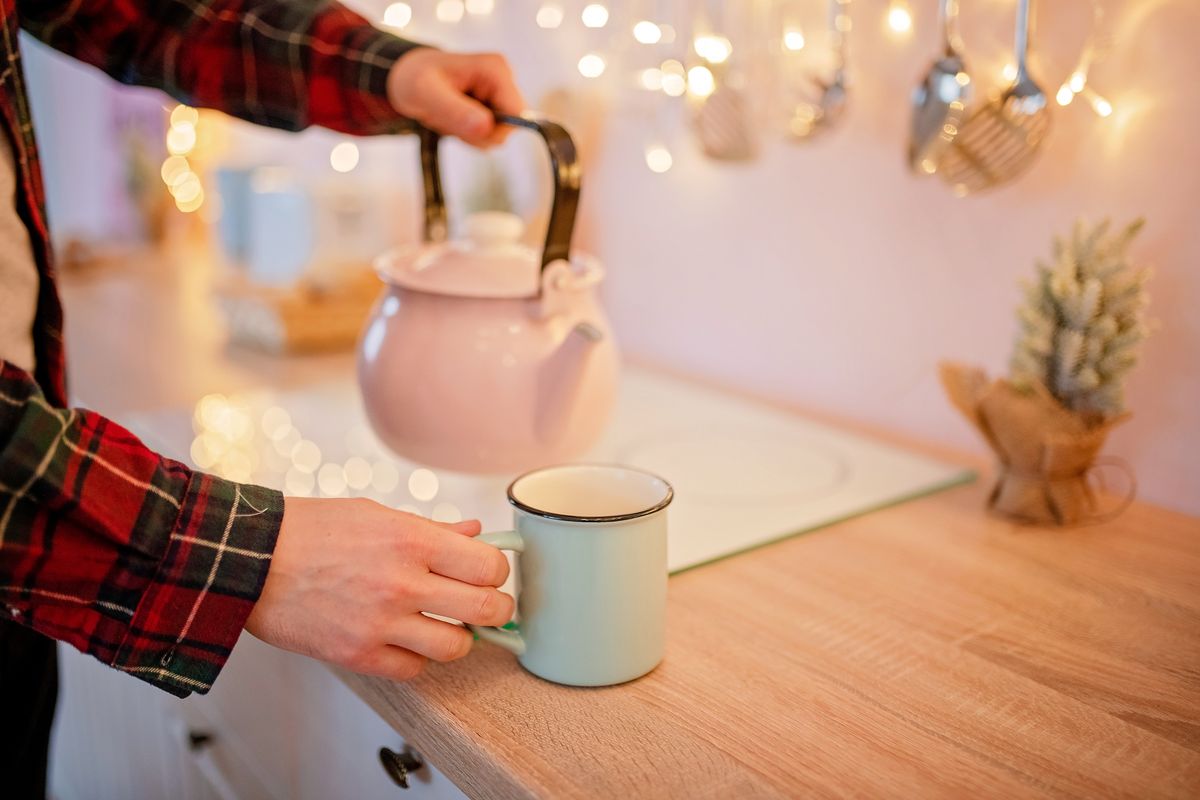
Habit researchers talk about habit stacking — attaching a new behavior to an existing one. Rituals are habit stacking taken seriously. You already boil the kettle. What if, while the water heats, you stood still and took three breaths instead of checking your phone? Same time slot. Different ritual.
But rituals do something habits alone do not. They reinforce identity. Every time you sit down for two minutes of quiet before eating, you are not just doing a thing. You are becoming a person who does that thing. "I am the kind of person who pauses." That identity shift is quiet, but it compounds.
There is also the anxiety question. Life is unpredictable. Work changes, relationships shift, plans collapse. Rituals create islands of predictability inside the chaos. Not rigid schedules — small, reliable anchors. The morning cup. The evening walk. The three breaths before a meal. They do not control what happens. They give you something steady to return to when everything else is not.
Here is the part that surprises people: even rituals that mean nothing still work. In controlled studies, participants who performed arbitrary pre-task rituals — gestures with no significance — performed better than those who did not. The ritual did not need to mean something. It just needed to be consistent and felt. The act itself was enough.
What the Traditions Knew That Science Is Catching Up To
Every major tradition — Taoist, Buddhist, Christian, Indigenous, Islamic — encodes its deepest teachings not in texts but in rituals. The teaching is not separate from the practice. The practice is the teaching.
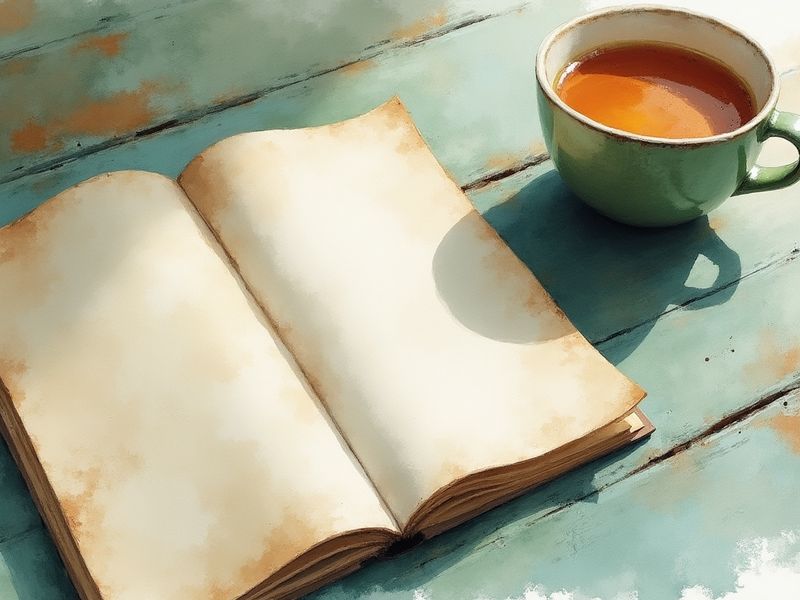
A tea ceremony does not just symbolize presence. It makes you practice presence. You cannot rush through it. The pouring, the waiting, the silence — these are not decorations around the lesson. They are the lesson. Your hands learn what your mind resists.
Prayer beads slow the breath. Incense marks the passage of time without a clock. Mealtime blessings create a pause between wanting and eating. These are not arbitrary customs. They are transition markers, refined over centuries of observation about what helps humans shift from one state to another.
The traditions did not have fMRI machines or randomized controlled trials. They had something else — thousands of years of watching what happened when people did certain things repeatedly, with attention, at certain times. And what they found is exactly what the research now confirms. Repeated, sensory, intentional actions change how we feel, think, and move through our days.
Science is not discovering something new. It is catching up to something very old.
Chinese medicine has always understood that the body thrives on rhythm. Eating at regular times, sleeping at regular times, moving at regular times — this is not rigidity, it is support. Qi flows in cycles, following the body clock (what TCM calls the "organ clock"), and rituals that align with natural transition points help energy move smoothly. A morning ritual supports the spleen and stomach qi that peaks between 7 and 9am. An evening ritual supports the kidney qi that deepens after dark. You are not creating rhythm from scratch. You are syncing with one that already exists.
The Tao does not need your rituals. But you might need them to notice the Tao. A ritual is a frame around an ordinary moment — and the frame is what makes you see it. Pour water into a cup and it is nothing. Pour water into a cup with attention, and it is everything. The ritual does not change the water. It changes you.
Designing Your Own Ritual
You do not need to invent something elaborate. You need to find a transition point that is already happening — and add one beat of intention.
Pick the transition. Morning to day. Work to home. Day to evening. Awake to asleep. You already cross these thresholds. You just cross them unconsciously, usually with a phone in your hand.
Add one element. A pause. A breath. A sensory anchor — the feeling of a cup in your hands, the sound of water pouring, the smell of something that is not a screen. You are not building a ceremony. You are inserting a single moment of presence into a transition you already make.
Repeat it at the same time for seven days. Not perfectly. Not with spiritual significance. Just consistently enough that your body starts to expect it. By day four or five, you will notice something shift. Not because you believe in it. Because your nervous system recognizes the pattern.
It does not need to mean anything. It does not need to connect to a tradition, a philosophy, or a belief system. It just needs to be consistent and felt.
If you want a starting point, the micro-rituals guide breaks this down into specific practices you can try today. Some involve tea. Some involve nothing but a breath and a doorway.
Everyone, but especially the skeptic who does not identify with "spiritual" language. This article makes the case in their language. If you are a Tight and Stuck type, be careful not to turn ritual design into another optimization project. One ritual. No spreadsheet.
The Ritual You Already Have
Go back to the beginning. The morning phone check. The bedtime scroll. The specific mug.
You already know what a ritual feels like. You already do them. The only difference between an unconscious ritual and a chosen one is a moment of noticing — this is what I do at this transition, and I am choosing to keep doing it, or choosing something different.
You do not need to believe in anything. You do not need candles or crystals or a spiritual practice. You just need to look at the rituals you already have and ask one question: is this one making my life better?
If the answer is yes, keep it. If the answer is no, try something else in that same slot. Same time, same transition, different action.
That is all a ritual is. A chosen action at a transition point, repeated until your body knows it by heart.
Start with one. See what happens. The way of the Tao has always taught that the smallest shifts carry the most weight — not because they are dramatic, but because they are real. And if you are looking for a broader sense of how conscious living actually works in practice, this is where it starts. Not with a life overhaul. With one moment, handled differently.
One transition. One breath. One cup.
That is enough.