It's 2am and your mind is running a meeting from six hours ago for the fourth time. Or it's 2pm and your chest is tight for no reason you can name. You've tried deep breathing, the app. You're open to trying anything that doesn't involve a prescription or another podcast.
Here's what a cup of tea can do — and more importantly, what the act of making that cup can do.
Why "Tea for Anxiety" Is More Than a Google Search
Search "tea for anxiety" and you'll get a list of calming herbs. Chamomile. Lavender. Passionflower. The lists are not wrong. But they are incomplete.
They focus entirely on the liquid in the cup. They skip the part that might matter more: the ten minutes you spend making it.
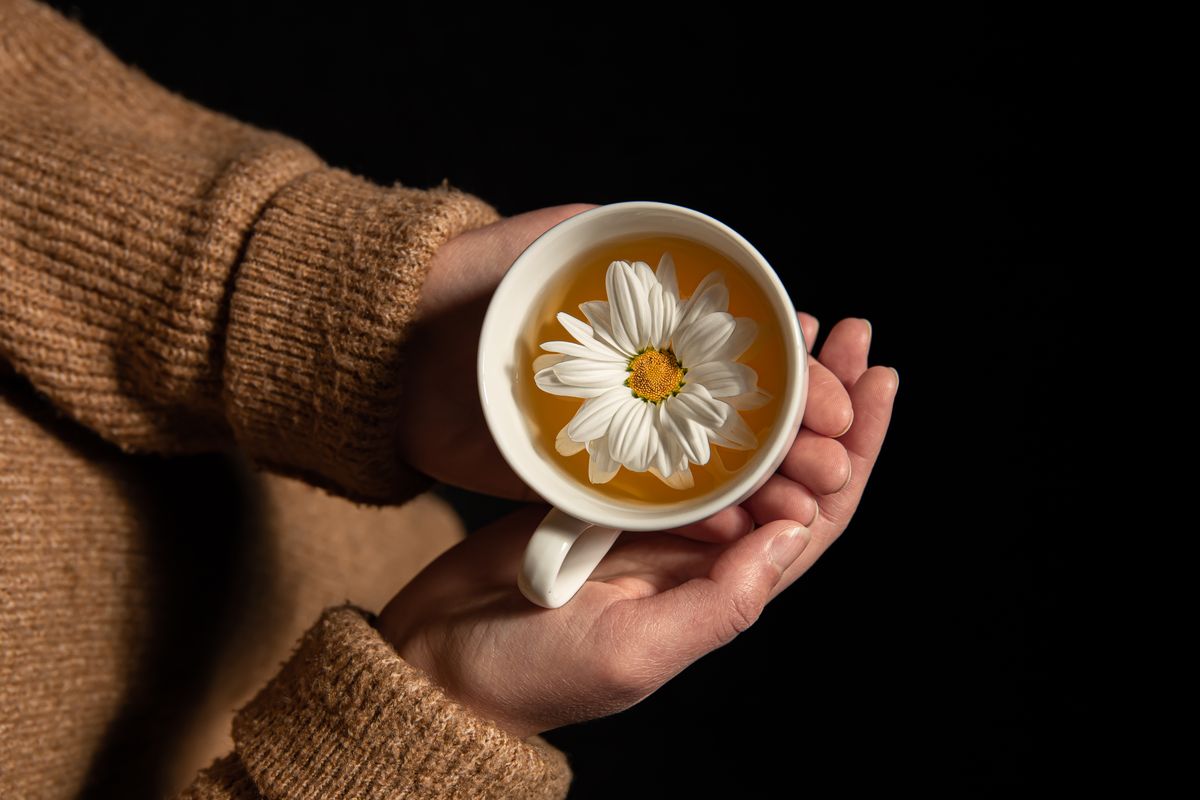
Slowing down to heat water. Measuring loose leaves or herbs into a strainer. Watching steam curl. Waiting. These are not just steps in a recipe. They are small, quiet acts that pull you out of your head and into your hands. The ritual itself is calming — not because of any magic, but because anxiety lives in the future and in the past, and making tea happens right now.
You are not just drinking something calming. You are doing something calming. That distinction matters.
The Teas That Actually Help
Not all calming teas are the same. Some cool. Some move. Some ground. The right one depends on what your anxiety actually feels like — but here are six worth knowing.
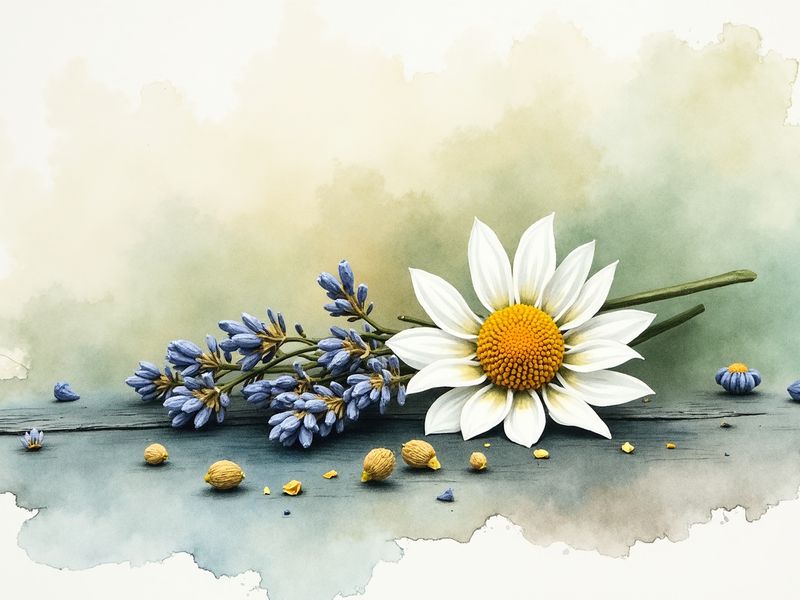
Chamomile. The most familiar, and for good reason. Chamomile is gently cooling and settling. It calms the stomach as much as the mind — useful because anxiety and digestion are more connected than most people realize. Drink it warm, not scalding. A cup before bed is classic, but it works at 2pm too.
Chrysanthemum. In TCM tradition, chrysanthemum is the go-to when heat rises to the head — headaches, a flushed face, eyes that feel hot and tired. It is light, floral, and cooling. If your anxiety shows up as pressure behind your eyes or a head that feels full, this is a good place to start.
Lavender. Lavender has a descending energy. It pulls things down and settles them. But a little goes a long way. Too much lavender tastes soapy and becomes unpleasant. Use a pinch — less than you think you need. Blended with chamomile, it is gentle and effective.
Passionflower. This one is specifically for racing thoughts. The kind of anxiety where your mind will not stop generating scenarios. Passionflower has been traditionally used as a gentle nervine — it quiets the mental loop without making you groggy. It works well blended with chamomile for a broader calming effect.
Reishi mushroom. Reishi is different from the others. It is an adaptogen — traditionally used to calm what TCM calls the shen, or spirit. It suits the kind of anxiety where you are exhausted but cannot stop. Wired but tired. Reishi needs simmering, not just steeping — fifteen to twenty minutes on low heat. The slow preparation is part of the point.
L-theanine-rich teas. Matcha and gyokuro are high in L-theanine, an amino acid that promotes calm focus. These work best when your anxiety shows up as brain fog or scattered attention rather than a racing heart. They have caffeine, so they are not for everyone — but if your anxiety makes you feel unfocused rather than wired, they are worth trying.
Matching Tea to Your Kind of Anxiety
Anxiety is not one thing. It has patterns. Matching the tea to the pattern makes a difference.
Hot and restless. Racing heart. Flushed skin. Can't sleep. Everything feels too fast and too warm. This pattern needs cooling, descending teas. Reach for chrysanthemum, chamomile, or passionflower. These bring things down and slow them.
Tight and stuck. Chest tightness. Jaw clenching. Irritability that sits like a knot under your ribs. This pattern needs movement — something to release the stagnation. Rose tea, mint, and lavender all have a gently circulating quality. They open things up instead of pressing them down.
Wired but tired. You are running on fumes but your nervous system won't shut off. Exhausted and anxious at the same time. This pattern needs grounding. Reishi simmered slowly. Jujube (red date) tea. Chamomile with a little honey. Something warm and substantial that tells your body it is safe to rest.
You might recognize yourself in more than one pattern. That is normal. Go with whatever feels most true right now.
Best for Hot and Restless (cooling, descending teas address the heat pattern behind most anxiety) and Tight and Stuck (moving teas release the stagnation that shows up as tightness). If you are Cold and Depleted, some calming teas are cooling and may drain you further — opt for reishi with cinnamon or warm jujube tea instead.
The Ritual Layer: Making the Tea IS the Medicine
When you are anxious, thinking about not being anxious does not work. Your mind cannot think its way out of a loop it is stuck in. But your hands can lead the way out.
The physical sequence of making tea — filling a kettle, choosing a cup, measuring leaves, pouring water, waiting — gives your body something concrete and sensory to do. It interrupts the spiral not by fighting it, but by replacing it with something real.
The warmth of the cup in your hands is grounding. Traditionally, the center of the palm is considered an acupressure point connected to the heart. Whether or not you think about that, wrapping your hands around something warm and steady does something that scrolling your phone does not.
Before your first sip, try three slow breaths. Not dramatic. Not performative. Just three breaths where you feel the steam on your face and the weight of the cup. That is the whole practice. Heat water. Make tea. Three breaths. Drink slowly.
The ten minutes this takes may be the calmest ten minutes of your day. Not because the herbs are miraculous — but because you gave yourself ten uninterrupted minutes of doing one quiet thing.
What Tea Cannot Do
Tea is a daily ally. A first response. A gentle support. It is not a replacement for professional help.
If your anxiety is persistent, escalating, or interfering with your ability to function — if it is affecting your sleep most nights, your relationships, your work — then tea as medicine is one layer of support, not the only layer. Therapy, medication, crisis support — these exist for good reasons. Using them is not a failure. It is honest self-care.
Tea fits alongside those things beautifully. A cup of chamomile before a therapy session. A tea ritual as part of a broader treatment plan. Reishi in the evening as one piece of a recovery practice.
Think of tea as a companion, not a cure. The best companion for the hardest days — warm, quiet, always available, asking nothing of you except that you sit still for a few minutes.
That is sometimes exactly enough.