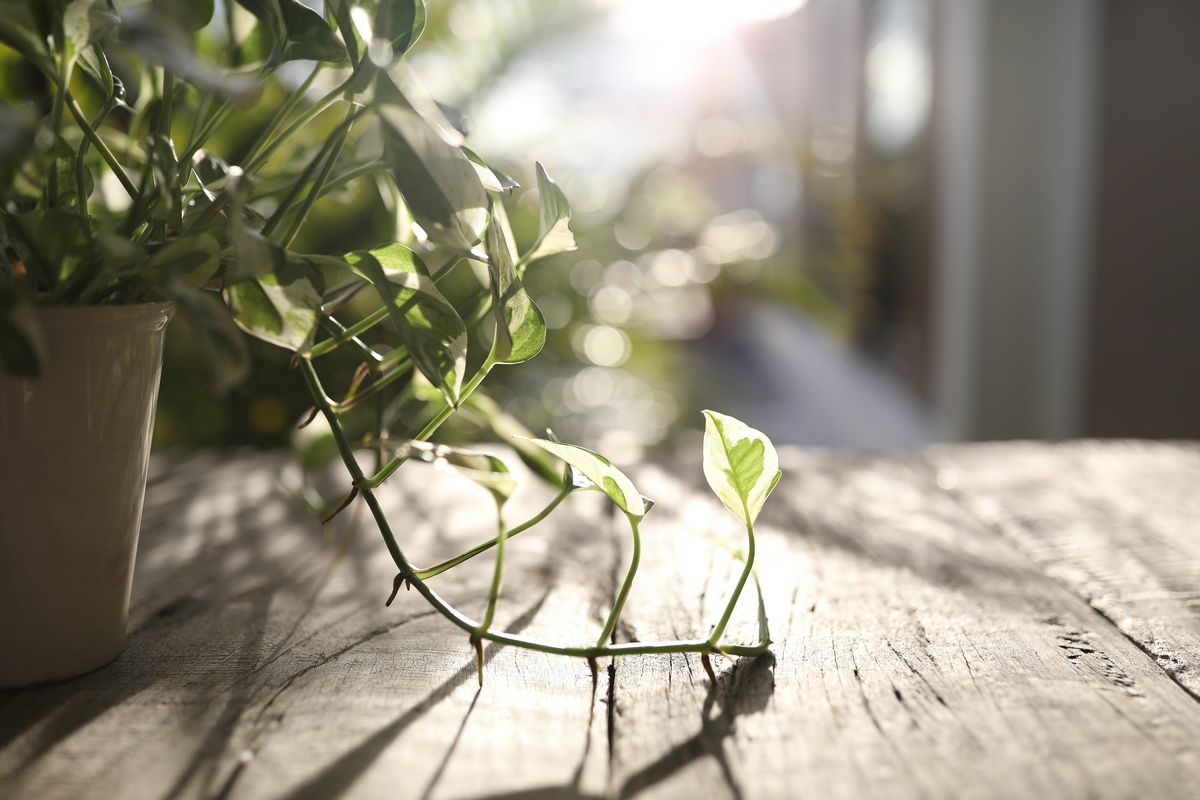
Your Space Is Speaking to You — Conscious Environment Design
You walk into your kitchen and your shoulders tighten. That corner where you always exhale? That difference is not random.
You walk into your kitchen and your shoulders tighten. You cannot explain why. The dishes are done, the counter is mostly clear, but something about the room feels heavy.
Now think about that one corner of your home where you always exhale. The reading chair. The window seat. The porch. That spot where your whole body softens without you deciding to soften.
That difference is not random. Your space is not neutral. It is either helping you or working against you, and you feel it whether you notice it or not.
Most of us spend our energy trying to fix how we feel — better food, more sleep, less stress. But we overlook the simplest thing: the rooms we live in every single day. The places where we wake up, cook, rest, and try to think clearly. These spaces are doing something to us all the time. And once you start paying attention, you cannot unsee it.
How Your Environment Reflects and Reinforces Your State
A cluttered desk costs you something. Not in a vague spiritual way — in a measurable, brain-processing-power way. Every object in your visual field is something your mind has to process, filter, or ignore. That takes energy. Energy you could be using for something else.
A dark, stagnant room slows you down. Low light signals your body to wind down. Still air feels thick. Piles of things you have been meaning to deal with become a quiet, constant reminder that you are behind. The room whispers it to you all day long.
Here is the thing most people miss: space is a mirror. When your inner life feels stuck, your home tends to look stuck. When things feel chaotic inside, the counters pile up. This is not a judgment. It is information.
And the good news is that it works both directions. Shifting your space can shift your state. Not because of magic — because your nervous system is always reading the room. A clear table tells your brain something different than a cluttered one. An open window changes the air and changes your breathing with it.
In the TCM perspective, qi flows through spaces the same way it flows through bodies. Blocked pathways — a hallway stacked with boxes, a room you avoid — create stagnation. And stagnation, whether in your body or your home, always shows up as some version of heaviness, frustration, or feeling stuck.
Kitchen as Sanctuary — The Heart of the Home
In traditional Chinese medicine, the kitchen holds a special place. It is where nourishment begins. If your body has a spleen — the organ of transformation and digestion — then your kitchen is the spleen of your house. It is where raw ingredients become the meals that sustain you. How that space feels matters more than most people realize.
Start with lighting. Harsh overhead fluorescents make a kitchen feel like a laboratory. Warm, soft light makes it feel like a place you want to be. This is not decorating advice. This is about whether your nervous system feels safe enough to slow down while you cook, or whether it stays in task-completion mode the entire time.
Then look at what sits on your counter. What is visible shapes your habits more than what is hidden in cupboards. A fruit bowl gets eaten. A bag of chips gets eaten. A clear counter with a kettle and a single plant tells you something about how this room wants to be used. A counter buried under mail, appliances, and yesterday's lunch containers tells you something else entirely.
Your kitchen is speaking to you. The question is whether it is saying "come in, slow down, make something good" or "just get through this as fast as you can." How your kitchen feels is information about how you are feeding yourself — not just with food, but with attention.
If you are curious about going deeper into the relationship between your kitchen and your wellbeing, the energy of your kitchen is a good place to start.

Practical Space Shifts (Not Mystical Feng Shui)
You do not need to rearrange your furniture according to a compass or hang crystals in your windows. What helps is much simpler than that.
Clear the entrance. What greets you when you walk through your front door sets the tone for everything that follows. A pile of shoes, a mountain of coats, a stack of packages you have not opened — that is what your nervous system absorbs first. It does not need to be perfect. It needs to not feel like an obstacle course.
Open the pathways. Walk through every room in your home. Can you move through without sidestepping piles, squeezing past furniture, or stepping over things on the floor? Your body reads blocked pathways as resistance. Open pathways feel like permission.
Let in natural light and air. Pull back the curtains. Open a window, even for ten minutes. Fresh air and sunlight do more for the energy of a room than any amount of organizing. If a room feels heavy, this is almost always the first thing to try.
The one-surface rule. In every room, maintain one clear surface. One. Your eyes need a place to rest. A single clear countertop in the kitchen. A nightstand with nothing but a lamp and a glass of water. A desk with just your computer. That one clear surface becomes an anchor for the whole room. It tells your brain: there is space here. There is room to breathe.
These are not aesthetic choices. They are nervous system choices. Your home does not need to look like a magazine. It needs to feel like a place where your body can let go.
In TCM, qi does not just flow through meridians in the body — it flows through your living space the same way. A room with blocked doorways, stagnant air, and piled-up belongings creates the spatial equivalent of qi stagnation. You feel it as heaviness, irritability, or the vague sense that something is wrong. Opening a window, clearing a pathway, or adding a plant does not just look better — it literally changes the flow of energy in the room. Your body responds before your mind even registers the change.
Creating a Pause Space
You do not need a meditation room. You do not need a spare bedroom or a dedicated yoga studio. You need one spot. One small, specific place in your home that exists for stillness.
A chair by a window. A cushion in the corner of your bedroom. A tea tray on a shelf with a favorite cup. Even a single stool on a balcony where you can sit with nothing in your hands for five minutes.
The point of a pause space is not that you use it constantly. The point is that it exists. It is a visual reminder that rest is allowed, even when you are not resting. Every time you walk past it, some part of you registers: slowing down is an option.
If you have ever thought "I do not have time to rest," a pause space gently argues otherwise. Not with words. Just by being there. If you want to explore this idea further, there is a whole piece on creating a pause space that walks you through the process step by step.
The same principle shows up in tea ceremony space — the idea that a dedicated place for a simple ritual can anchor your entire day.
The Energy of Clutter (And Why Decluttering Misses the Point)
Here is what most organizing advice gets wrong: it treats clutter as the problem. Throw things away. Buy containers. Adopt a system. And yes, sometimes that helps. But it misses the deeper question.
Clutter is not a moral failing. It is not laziness. It is information about your inner state.
A kitchen counter buried under unopened mail might be telling you that you are avoiding something. A closet stuffed with clothes you never wear might be holding onto a version of yourself you have outgrown. A garage full of boxes from a move three years ago might mean you have not fully landed in your life yet.
The question is not "how do I get rid of all this stuff?" The question is "why did I accumulate it?" And sometimes, when you sit with that question honestly, the clearing happens on its own. Not because you forced yourself, but because you understood something.
And sometimes full shelves are fine. A bookshelf packed with books you love is not clutter. A kitchen stocked with spices you actually use is not excess. The difference is awareness. Do you know what is there? Does it serve you? Or has it just... gathered?
Awareness first. Action second. Always in that order. If this resonates, you might appreciate a deeper look at why clutter is not really the enemy — and what it is actually trying to tell you.
The Taoist principle of simplicity and non-attachment is not about owning nothing. It is about being honest with yourself about what you are holding and why.

Space by Body Type
Not everyone needs the same kind of space. In TCM, your constitution shapes what kind of environment supports you best. Here is a starting point.
If you tend toward cold and depleted — you need warmth. Soft textures. Warm lighting. Blankets within reach. Rugs underfoot instead of cold hard floors. Your home should feel like a hug. Avoid stark, minimal spaces that feel empty rather than peaceful. You need coziness, not austerity.
If you tend toward hot and restless — you need cooling. Think uncluttered surfaces, muted colors, minimal visual stimulation. Space to breathe. Fewer things competing for your attention. Cool tones, natural materials, and rooms that do not add more heat to a system that already runs warm. Less on the walls. More open floor.
If you tend toward heavy and foggy — you need air and brightness. Open the windows. Let the light in. Choose spaces that invite movement rather than sinking. Reduce damp corners — literally and energetically. Bright colors in small doses. Plants that grow upward. A home that gently encourages you to move rather than one that lets you disappear into the couch.
If you tend toward tight and stuck — you need flow and openness. Fewer right angles. Rounded edges where possible. Plants. Open pathways with nothing blocking them. Spaces that feel like they are inviting you forward rather than holding you in place. Movement should feel easy in every room.
You do not have to redesign your entire home. Start with the room where you spend the most time. Make one shift that matches what your body actually needs. That is conscious consumption at its most practical — choosing your environment with the same care you would choose your food.
Where to Start
You do not need a renovation. You do not need to spend money. You do not even need a free weekend.
Walk through your home right now. Not to clean — to notice. Where do your shoulders relax? Where do they tighten? Where do you naturally linger, and where do you rush through?
That information tells you everything you need to know about where to start.
One room. One surface. One window opened. That is enough. Your space has been speaking to you for a long time. All you have to do is start listening.
This is part of a larger conversation about conscious living — the practice of bringing awareness to the ordinary things that shape your days. Your home is one of the most ordinary, most powerful places to begin.