Simplicity & Space — The Power of Less
Taoist simplicity isn't about owning less — it's about clearing the way for what matters. Less input, more presence, better digestion of life.
Your closet is full and you have nothing to wear. Your calendar is packed and you have no time. Your phone has 47 apps and you feel less connected than ever.
You're drowning — not in problems, but in stuff. Stuff you own, stuff you do, stuff you consume. And the quiet voice underneath keeps asking the same question: what if you just had less?
That voice isn't lazy. It isn't ungrateful. It's the part of you that remembers what spaciousness feels like — and misses it. This page is about listening to that voice. Not as a lifestyle project, but as a way of returning to something real.
This Is Not Minimalism
Let's start by naming what this isn't.
Minimalism — at least the version that shows up on social media — is an aesthetic. White walls, empty counters, a single plant on a windowsill. It's beautiful. It's also curated. And curation is its own form of accumulation: the effort to maintain the appearance of having less.
Taoist simplicity is something else entirely. It's not about deprivation. It's not about counting your possessions or living in an empty room. It's about alignment — keeping what serves you and releasing what doesn't. Not because austerity is virtuous, but because space is useful.
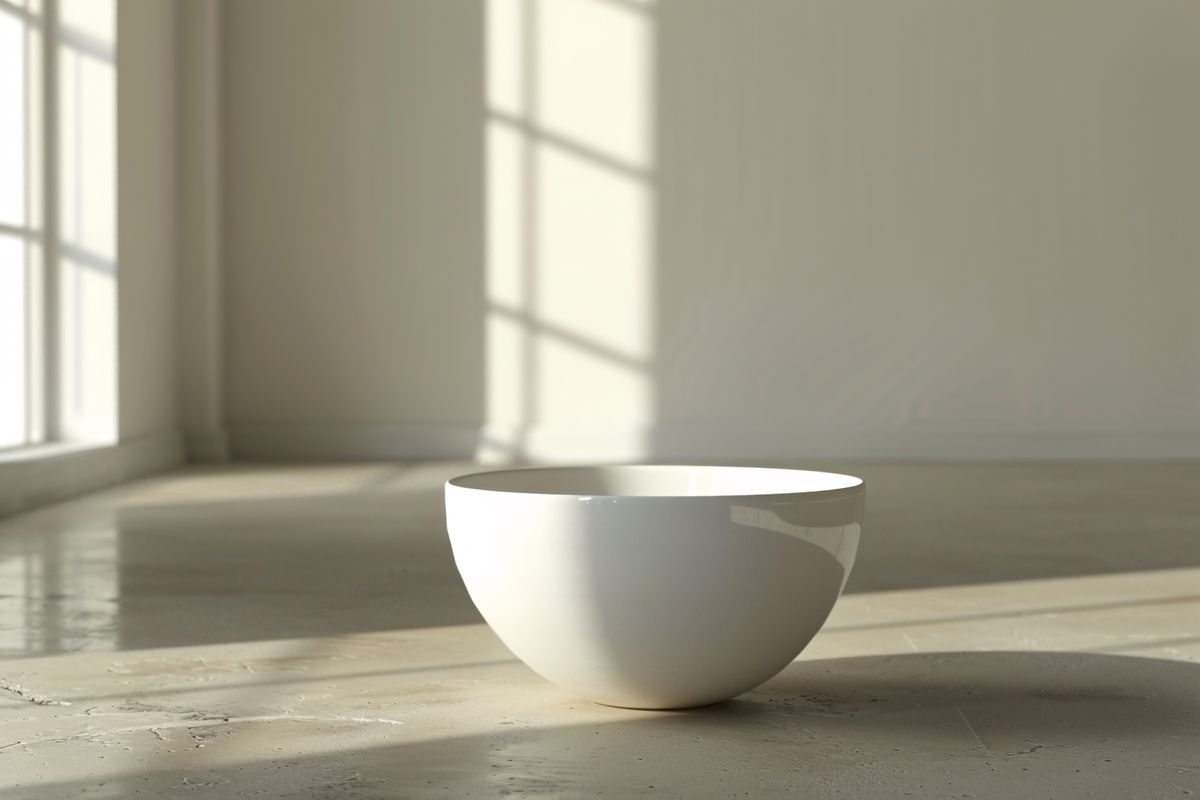
Lao Tzu used the bowl as his example. A bowl is made of clay, but the usefulness of the bowl is in its emptiness. Without the hollow center, the bowl can hold nothing. A room with no space between the furniture can't be lived in. A day with no gaps between appointments can't be breathed in.
The emptiness is the point. The space is what makes things work.
This changes the question from how little can I survive with? to how much space do I need to feel alive? That's a gentler question. And it leads somewhere very different.
How Accumulation Became the Default
Nobody wakes up one morning and decides to be overwhelmed. It happens gradually — one subscription, one commitment, one purchase, one notification at a time. Each addition seems reasonable in isolation. Together, they form a life that's difficult to navigate.
We live in a culture that treats more as better. More options, more possessions, more achievements, more content. The grocery store offers forty kinds of pasta sauce. The streaming service offers ten thousand films. Your inbox offers a never-ending stream of things that want your attention.

Every addition asks something of you — attention, maintenance, guilt, storage, decision-making energy. The jacket you never wear still takes up closet space and mental space every time you see it. The app you never open still sends notifications. The friendship you've outgrown still generates obligation.
You didn't choose overwhelm. It accumulated. Like dust on a shelf — not through any single act, but through the slow, steady arrival of things that never got cleared away.
The Taoists had a phrase for this: wei wu wei — doing without overdoing. Not laziness, not passivity, but an attentiveness to what's actually needed versus what's merely possible. The question isn't can I add this? It's does this need to be here?
Most of the time, the honest answer is no.
The Weight of Too Much
Too much of anything creates a specific kind of heaviness. It's worth naming what that heaviness actually feels like, because once you recognize it, you can't unsee it.
Physical clutter operates like a low-level hum of unfinished business. Every object in your visual field is a tiny open loop — something to be dealt with, cleaned, organized, or decided about. Research on cognitive load confirms what you already feel: cluttered environments increase cortisol and decrease focus. Your space is talking to your nervous system all day long.
Mental clutter works similarly. Too many inputs overwhelm your ability to process any of them well. When you consume more information than you can digest — more news, more opinions, more content, more advice — the result isn't greater understanding. It's a vague, buzzing confusion. You know more facts but feel less clear.
Emotional clutter is the accumulation of obligations, expectations, and relationships that no longer fit. The committee you said yes to out of guilt. The social media account you maintain out of habit. The standard you hold yourself to because someone, somewhere, once told you it mattered. These take up emotional bandwidth, and bandwidth is finite.
And then there's the deeper layer — what the Taoists would call the spiritual weight of refinement. There's a concept in the Tao Te Ching called p'u, the uncarved block. It represents the raw, natural state of things before they've been shaped, polished, branded, and optimized. The uncarved block is more valuable than the finished statue — not because the statue is bad, but because the block still contains every possibility.
When your life is overprocessed — overcommitted, overdecorated, overexplained — you lose contact with the raw material underneath. Simplicity is how you find your way back to the block.
What Simplicity Looks Like in Practice
The good news is that simplicity doesn't require a dramatic overhaul. It doesn't require selling your house, quitting your job, or moving to a cabin. It requires one small subtraction. Then another. Then another.
Here's what it might look like:
In the kitchen: Three ingredients, full attention, one bowl. A meal doesn't need twelve components to nourish you. Rice, greens, and a poached egg, eaten slowly at the table without a screen — that's a complete experience. The food-as-medicine approach has always been about this: simple ingredients, properly chosen, given real attention.
In your schedule: One unplanned afternoon. No agenda, no errands, no productive use of time. Just an open stretch where you can do whatever arises — or nothing at all. If this sounds uncomfortable, that discomfort is information. It tells you how far you've drifted from ease.
In your home: One drawer emptied. Not reorganized — emptied. Take everything out, put back only what you actually use. Let the rest go. Then notice how that one clear drawer makes you feel. That feeling is available everywhere.
In your digital life: One account unfollowed. One notification turned off. One app deleted. The way of the Tao doesn't require going off the grid. It requires being honest about what's adding to your life and what's just adding to the noise.
The practice is: subtract.
Not all at once. Not as a project with a deadline. But as a continuous, gentle question you carry with you: does this need to be here? Sometimes the answer is yes. When it's no, let it go.
The Beauty of Imperfection and Wear
There's a reason simplicity and perfection don't live in the same house.
Perfection demands maintenance. It demands replacements, upgrades, touch-ups, and anxiety about scratches. When your standard is flawless, you need more things — backups, protectors, insurance, alternatives. Perfection is expensive in every sense.
But look at the things you actually love. The mug that's slightly chipped. The table with decades of knife marks and water rings. The sweater with a patched elbow. These things carry history. They've been used, and the use is written into them.
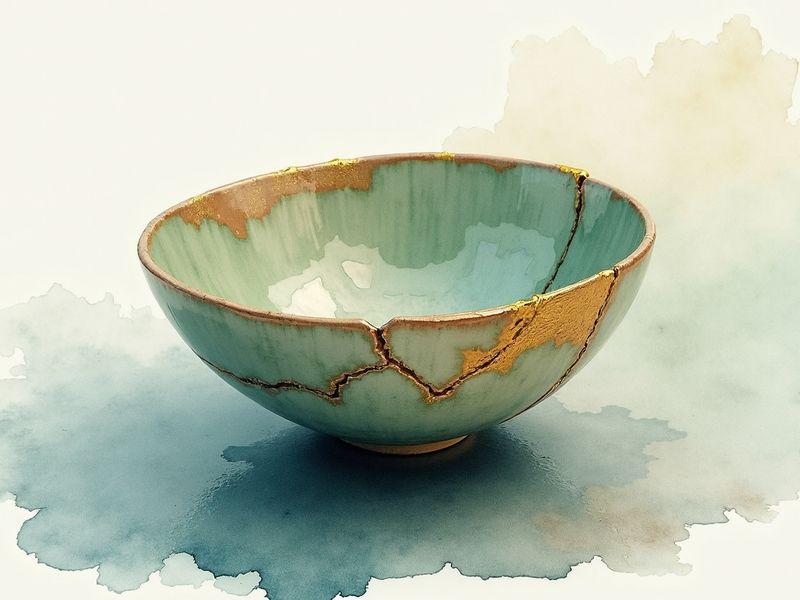
The Japanese concept of kintsugi — repairing broken pottery with gold — captures this beautifully. The breakage is not hidden. It becomes the most interesting part of the story. The crack, filled with gold, is more beautiful than the original unbroken surface.
When you let go of perfection, something remarkable happens: you need fewer things. You stop replacing what still works. You stop chasing the newer version. You develop a relationship with the objects in your life — a real one, built on use rather than display.
This isn't a philosophy of settling. It's a philosophy of seeing. The wear on your favorite cutting board is evidence of a thousand meals. The dog-eared pages of your favorite book are evidence of a mind that returned to the same words again and again. These marks are not damage. They're the autobiography of a life being lived.
Simplicity means having few enough things that you can actually notice them. When you own less, you see more.
The Subtraction That Adds
There's a paradox at the heart of this: taking things away feels like it should leave you with less, but it doesn't. It leaves you with more — more attention, more space, more presence, more capacity to actually experience what's in front of you.
A clear counter in the kitchen doesn't just look better. It invites you to cook. A clear afternoon doesn't just feel restful. It invites you to live. A clear mind doesn't just think better. It notices things — the light changing, the taste of your tea, the sound of rain — that were always there but couldn't get through the noise.
This is what seasonal living teaches in a different register: there are times to gather and times to release, times to grow and times to let go. Winter doesn't apologize for being empty. The empty branches are what make spring possible.
You are allowed to have a winter in your life. You are allowed to empty your branches. You are allowed to need less than the culture says you should want.
In Chinese medicine, the Spleen — paired with the earth element — is responsible for transformation and transportation. It takes what you consume and turns it into usable energy. "Consume" doesn't just mean food. It means everything that enters your system: information, stimulation, conversation, images, noise.
When the Spleen is overwhelmed by too much input, it can't process efficiently. The result, in TCM terms, is dampness — that heavy, foggy, bloated feeling where your thinking is cloudy, your body feels sluggish, and your motivation dissolves. Brain fog, poor digestion, heaviness in the limbs, a thick coating on the tongue — these are all signs of a Spleen struggling under the weight of too much.
Simplicity is Spleen medicine. Fewer inputs mean better processing. Simpler meals digest more easily. Less information means clearer thinking. Less stimulation means steadier energy. When you subtract from your environment, you're directly supporting the organ system that turns your life into something you can actually use. For more on how food supports this process, explore the Food as Medicine pillar.
"In pursuit of learning, every day something is acquired. In pursuit of the Tao, every day something is dropped."
This line from the Tao Te Ching (Chapter 48) is one of the most quietly radical ideas in all of philosophy. It doesn't say learning is bad. It says that the deepest understanding moves in the opposite direction — not toward accumulation, but toward release.
Simplicity isn't a lifestyle trend. It's the direction the Tao itself moves — toward less, not more. Toward essence, not accumulation. Toward the root, not the branches. Water doesn't add. It finds the lowest place and rests there. Seeds don't complicate. They hold only what's needed and wait.
When you simplify your life, you're not making a sacrifice. You're aligning with the deepest current there is. You're doing what rivers do, what seasons do, what breath does when you stop controlling it. You're returning to what was always underneath the noise: the quiet, uncarved, breathing center of things.
You may recognize yourself in the accumulation pattern — holding on to things, commitments, and control because letting go feels unsafe. Simplicity for you isn't about force. It's about trust. Start with the smallest thing you can release without anxiety. A single object. A single obligation. Notice that nothing collapses. Then try another.
The fog you feel may be directly related to input overload. Your system is waterlogged with too much — too much food, too much scrolling, too much sitting with unprocessed experience. Simplicity for you is medicine in the most literal sense. Start with your meals: fewer ingredients, smaller portions, more space between eating. Then extend outward. Less screen time. Less noise. More quiet. The fog lifts when the Spleen can finally catch up.
Where to Start
You don't need a plan. You need a single honest look at your life and the willingness to ask: what here is not actually mine?
Not mine meaning — not my taste, not my need, not my season, not my truth. Someone else's expectation living in your closet. Someone else's ambition living in your calendar. Someone else's anxiety living in your phone.
Find one thing. Let it go. Feel the space it leaves behind. That space is not emptiness. It's possibility. It's breathing room. It's the hollow center of the bowl — the part that makes everything else useful.
The Tao doesn't ask you to become less. It invites you to discover what's already here when you stop adding more.