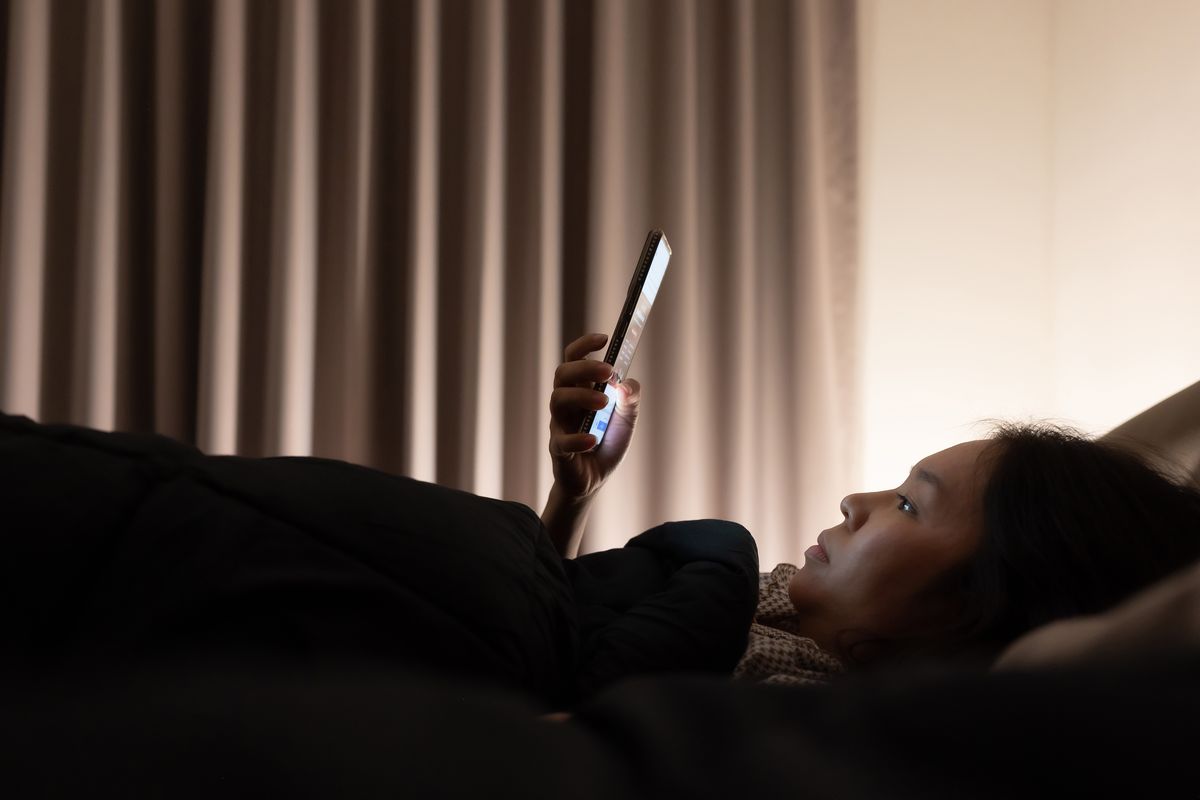
You are not even awake yet and you already know what your coworker thinks about the meeting. You know what your sister posted at midnight. You know that something terrible happened somewhere far away. Your eyes have been open for 90 seconds. Your nervous system has been open for less.
And it is already full.
Most of us do not decide to check our phones first thing in the morning. We just do it. The hand reaches before the mind catches up. It is the most automatic gesture of modern life, and it sets the tone for everything that follows.
This is not about willpower or discipline. It is about what happens in those first quiet moments of the day — and what you lose when you give them away.
The 90-Second Window
There is a brief stretch right after waking when the brain is unusually receptive. You are still soft, still open. The mental filters that help you sort and prioritize during the day have not fully come online yet.
This is why the first thing you take in matters so much. Whatever fills that window tends to set the emotional baseline for your morning. A news headline hits different at 6:14 a.m. than it does at noon.
When you reach for your phone in that window, you hand the first minutes of your day to other people's agendas. Emails, notifications, feeds — none of them are asking what you need. They are telling you what they need.
The experiment is simple. What if the first 10 minutes of your day belonged to you?
Not to your boss. Not to the algorithm. Not to the news cycle. Just you, in your body, in your house, with nothing to respond to yet.
What to Do Instead (The Boring Version)
Here is the underwhelming truth. You do not need a morning ritual. You do not need to journal or meditate or do sun salutations. You just need the absence of input.
Feet on the floor. A glass of water. Maybe you stand at the window for a minute and notice the light.
That is it. That is the whole practice.
If you want more, a warm drink is good. A stretch feels nice. Sitting quietly with your hands around a mug while the house is still — that is a kind of luxury most of us have forgotten we can afford.

But do not turn this into another optimization project. The point is not to replace scrolling with a more virtuous activity. The point is spaciousness. Ten minutes with nothing demanded of you.
For parents of small children — yes, this is harder. Ten minutes earlier than the kids works if you can manage it. If you cannot, even the two minutes in the bathroom before the day starts count. Close the door. Breathe. Do not bring the phone in with you.
The real shift is not about adding something. It is about not adding the thing that fills you up before you have had a chance to feel empty.
The Resistance (And Why It Is a Good Sign)
The first morning you try this, you will feel a pull. Your hand will reach for the nightstand. Your brain will offer a very reasonable story — just checking the time, just seeing if anything important happened, just a quick look.
That pull is not weakness. It is a nervous system habit. Your body has learned that the phone delivers a small hit of stimulation, and it has come to expect that hit the way it expects coffee. When you withhold it, there is a gap. The gap feels uncomfortable.
This is actually useful information.
What you notice in the quiet tells you something about what you have been avoiding. Maybe it is boredom. Maybe it is anxiety that was already there, just masked by the scroll. Maybe it is a strange kind of loneliness that has nothing to do with other people and everything to do with not having spent time with yourself in a while.
If you are building a broader practice of paying attention to where your energy goes, this is a good place to start. The morning reveals a lot when you let it be quiet.
Whatever comes up, you do not have to fix it. Just notice it. That is enough for now.
Making It Stick Without Making It a Project
The single most effective change is also the most boring: charge your phone outside the bedroom. If it is not on your nightstand, you cannot reach for it before your feet hit the floor.
Get a simple alarm clock. The kind that does one thing. It wakes you up. It does not also show you the weather, your calendar, and 47 unread messages.
Then give yourself one week. Not a month. Not a new-year resolution. Seven mornings.
Some of those mornings will feel strange. Some will feel like nothing is happening. A few might surprise you with how calm the first hour becomes when it starts without noise.
Do not fill your phone-free time with podcasts, audiobooks, or another screen. The temptation to swap one input for another is strong, but it misses the point entirely. This is about building morning and evening rhythms that let your nervous system wake up at its own pace.
If you find yourself wanting to go deeper into your relationship with your devices, there is a longer conversation to be had about how we relate to our phones in general. But that is for later. Right now, just start with the morning.
This one is for everyone. Every archetype benefits from reclaiming the first ten minutes of the day. If you rely on your phone for medical alerts or caregiving, modify rather than eliminate — the goal is reducing unconscious scrolling, not ignoring real needs.
Start Here
The first 10 minutes of your day are the most impressionable. They are the quietest, the softest, the most open.
When you give them to your phone, you start reactive. You begin the day already responding, already behind, already full of things that are not yours.
When you give them to yourself — even if all you do is drink water and look out the window — you start grounded. You start from your own center instead of someone else's.
Phone outside the bedroom. Alarm clock by the bed. One week.
That is the whole experiment.