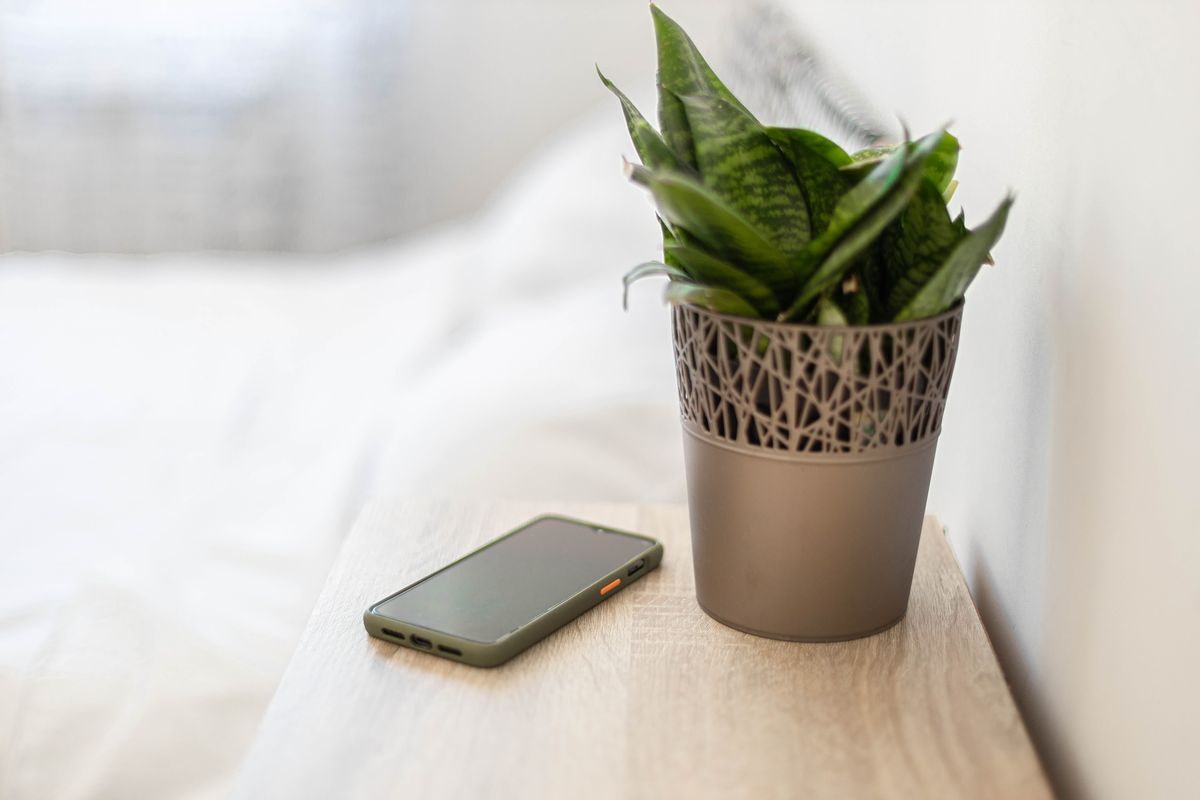
The Attention Diet: Why What You Consume Matters More Than What You Eat
You spend an hour choosing organic produce, then go home and spend three hours consuming content that leaves you anxious and numb.
You spend an hour choosing organic produce at the grocery store. You read the labels. You compare brands. You put back the one with the ingredient you cannot pronounce.
Then you go home and spend three hours consuming content that leaves you anxious, angry, or numb. And you do not think twice about it.
Nobody talks about the other diet — the one your mind is on. The steady stream of headlines, notifications, arguments, opinions, and strangers' curated lives that you take in from the moment you wake up until the moment you fall asleep.
This diet is making you sicker than anything in your pantry.
Not because technology is evil. But because what you consume with your attention shapes your inner life just as powerfully as what you consume with your mouth. Maybe more so.
Your Attention Is Finite — Where Does It Actually Go?
Most people can tell you roughly how many calories they eat in a day. Very few can tell you where their attention goes. And attention is the more valuable currency. You can always earn more money. You can never earn more time.
Think of the last week. How many hours went to scrolling through feeds you did not choose to open? How many went to reading comments sections that made you feel worse? How many went to watching content you forgot within minutes?
This is not a guilt trip. It is an attention audit. And it matters because wherever your attention goes, your energy follows.
There is an old Taoist observation that the mind follows the eyes. Whatever you look at, you feed. Whatever you feed, grows. If you spend three hours a day looking at things that make you anxious, you are growing anxiety. Not because you are weak. Because that is how attention works.
The people in your life who seem calm, grounded, and present are not superhuman. Most of them have simply — consciously or not — put themselves on a different attention diet. They are not consuming less. They are consuming differently.
The first step is not to change anything. It is to notice. For one day, just pay attention to your attention. Where does it go when you are not deliberately directing it? The answer might surprise you.
Single-Tasking as a Radical Act
Somewhere along the way, we decided that doing multiple things at once was a sign of competence. The person answering emails during a meeting while texting under the table was "productive." The person doing one thing at a time was "slow."
But here is what the research keeps showing, and what you already know in your body: multitasking is not efficiency. It is fragmentation. You are not doing three things at once. You are doing three things poorly, while your nervous system pays the tax of constant switching.
Single-tasking — doing one thing at a time with your full attention — has become a radical act. It feels almost rebellious to eat a meal without a screen. To have a conversation without checking your phone. To sit with a cup of tea and just sit with a cup of tea.
Try it, and you will notice something uncomfortable. Being fully present means feeling whatever you have been avoiding. The meal tastes different when you are actually tasting it. The conversation gets deeper when you are actually listening. And the silence between activities becomes almost unbearable — at first.
That discomfort is not a sign that something is wrong. It is a sign that something is finally right. You are encountering yourself without a buffer. This is what the Taoist concept of wu wei points toward — not doing nothing, but being so fully present in one thing that effort dissolves. You cannot get there while split across five tabs and three conversations.
Start small. One meal a day, eaten without a screen. One conversation, had without your phone on the table. Not as a discipline. As an experiment. See what happens when you give one thing your whole self. For more on building this skill, explore the practice of single-tasking as a daily rhythm.
Digital Consciousness — Not a "Detox" but an Ongoing Practice
You have probably tried a digital detox. Maybe a weekend without your phone, or a week off social media. And it probably felt wonderful — for a while. Then you went back to exactly what you were doing before.
This is the problem with detoxes. They end. And when they end, nothing has changed about the underlying relationship.
What we are talking about here is not a detox. It is digital consciousness — an ongoing, daily practice of choosing what you let into your mind. Not demonizing your phone. Not throwing it in a lake. Just changing the terms of the relationship.
Three shifts that actually stick:
The notification audit. Go into your settings right now and turn off every notification that is not from an actual human being who matters to you. No app alerts. No news pushes. No promotional pings. Your phone should interrupt you only when a person you love needs you. Everything else can wait until you choose to look. This single change will alter the texture of your days.
One phone-free hour. Not a whole day. Not a weekend. One hour, every day, where your phone is in another room. Not on silent in your pocket — in another room. Use this hour for anything: cooking, walking, reading, talking, sitting. The point is not what you do. The point is what you do not do. You do not check.
No phone in the bedroom. Buy a five-dollar alarm clock. Charge your phone in the kitchen. The first and last things you experience each day should not be a screen full of other people's emergencies. Let yourself wake up slowly. Let yourself fall asleep without one last scroll.
Your phone can also become a tool for presence rather than distraction. Use it for a tea timer. Use it to play ambient sounds while you stretch. The device is not the enemy. The unconscious use of it is.
If you want to go deeper into the mechanics of what happens in your body during hours of unconscious scrolling, read about what doom scrolling actually does to your nervous system. And if you find that comparison is the specific poison your feed delivers, explore why the feeling of not being enough is manufactured, not real.
In Traditional Chinese Medicine, the heart houses the shen — your spirit, awareness, and capacity for presence. When the shen is disturbed by constant stimulation, the result looks a lot like what most people describe as anxiety, insomnia, and inability to focus. Every notification, every scroll, every argument you witness online agitates the shen. Quieting input is not a productivity hack. It is the equivalent of letting a shaken snow globe settle. The clarity was always there — it was just stirred up.
Boredom as Medicine
We have made boredom the thing to avoid at all costs. The moment there is a gap — waiting in line, sitting in a car, lying in bed before sleep — we reach for the phone. We fill every crack of silence with content.
But boredom is not empty. Boredom is where things grow.
Ideas are born in boredom. Your nervous system resets during boredom. Creativity, problem-solving, self-awareness — they all arise in the space that boredom provides. The shower thought, the walk-in-the-woods insight, the sudden clarity about a relationship — these do not happen while you are consuming. They happen when you stop.
The discomfort of boredom is really the discomfort of being alone with yourself. And most of us have not been alone with ourselves — truly alone, without input — in a very long time. We are strangers to our own minds. Not because we are shallow. Because we never stop long enough to go deep.
This is a quiet crisis. An entire generation is losing the ability to sit with nothing. And sitting with nothing is where every contemplative tradition — Taoist, Buddhist, Stoic, Christian mystic — says the real work happens.
You do not need to meditate for an hour. You do not need a retreat. You just need to stop filling every gap. Wait in line without your phone. Sit in the car for a minute before you go inside. Lie in bed and stare at the ceiling. Let yourself be bored.
It will feel terrible at first. That is the medicine working.

Three Attention Shifts You Can Make Today
You do not need a plan. You do not need an app. You do not need willpower, money, or time. You just need a decision.
Eat one meal without a screen. Any meal. Put the phone in another room. Turn off the television. Sit with your food and eat it. Taste it. Notice the textures. Notice when you are full. This is not mindful eating as a practice — it is just eating, the way humans ate for thousands of years before we decided meals needed entertainment.
Leave your phone in another room for one hour. Pick an hour. Any hour. Put the phone somewhere you cannot see or hear it. Then do whatever you want. The first ten minutes will feel strange. You might feel a phantom buzz in your pocket. You might catch yourself reaching for something that is not there. That reflex is the thing to notice. It tells you something about your relationship with your phone that is worth understanding.
Walk somewhere familiar without headphones. A route you know well. No podcast. No music. No phone call. Just you and the sounds of the world. The birds, the wind, the traffic, your own footsteps. Notice what your mind does when it has no input to process. It might race at first. Then, somewhere around the ten-minute mark, it usually begins to settle. Sometimes, if you are lucky, it goes quiet.
None of these are dramatic. None will transform your life overnight. But they will crack open a door that has been closed for a while — the door to your own attention, your own presence, your own life happening right now instead of on a screen.
The Conscious Living path is not about perfection. It is about noticing. And noticing starts with what you let in.
Try it now. Put your phone in another room for the next hour. Not as a punishment — as an experiment. Notice what happens when you remove the option to scroll. The discomfort is the information.
If you want to explore what happens when you let boredom become a regular guest, or if you are ready to look honestly at the way comparison steals your peace, those doors are open. Walk through whichever one calls to you.