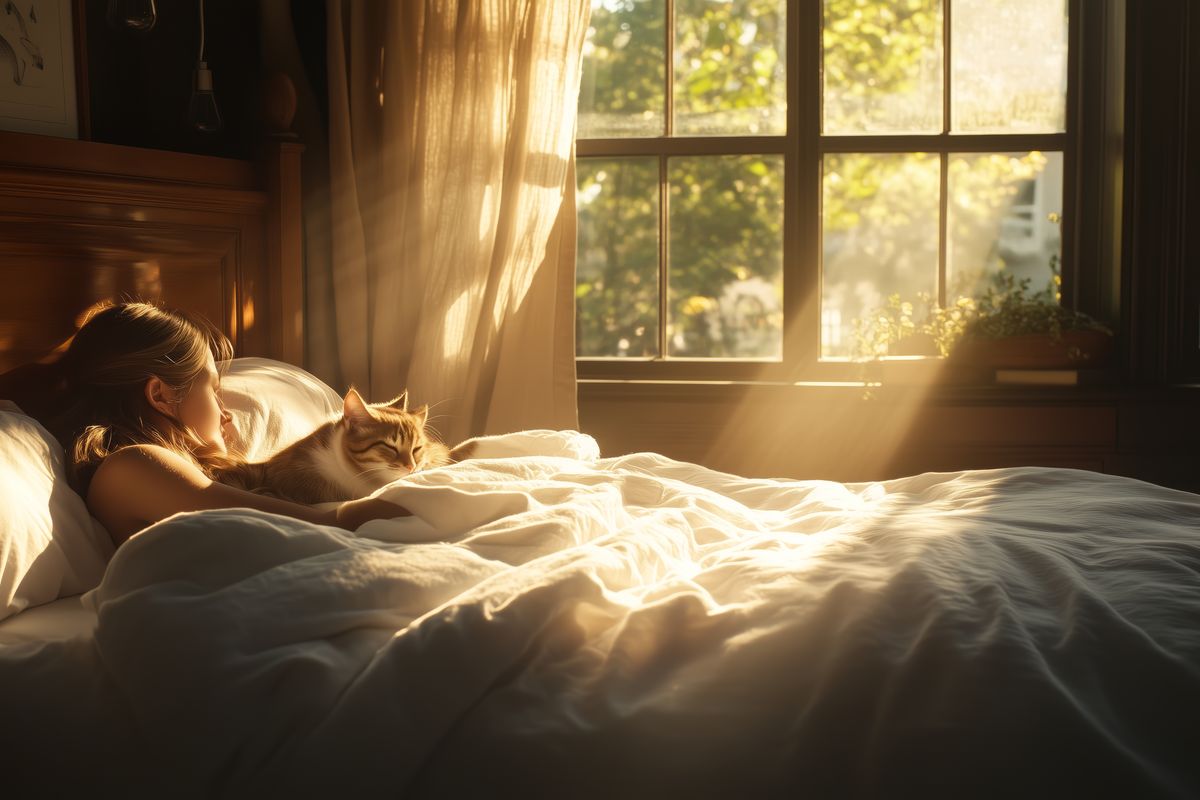
The Art of Doing Nothing (And Why It's Harder Than It Sounds)
You finally have a free afternoon. Within ten minutes you're cleaning the kitchen. Doing nothing is supposed to be easy — so why is it the hardest thing you've ever attempted?
You finally have a free afternoon. No work, no errands, no obligations. And within ten minutes you are cleaning the kitchen, starting a load of laundry, and making a mental list of things to do tomorrow.
Doing nothing is supposed to be easy. So why does it feel like the hardest thing you have ever attempted?
If you have ever sat down to rest and immediately felt restless, guilty, or strangely anxious — you are not broken. You are just living in a world that never taught you how to stop.
Why Rest Feels So Hard
Our culture treats rest as the absence of productivity. It is what happens when you run out of steam, not something you choose on purpose. The message is clear: if you are not doing something, you are falling behind.
So rest triggers guilt. It triggers anxiety. It triggers that voice that says you should be doing more, earning more, improving more. For some people, stillness is even harder than that. Because when you finally stop moving, you start feeling whatever you have been outrunning.
This is not a personal failing. It is a design flaw in the way we think about rest.
In Taoist philosophy, there is a concept called wu wei — often translated as "non-doing" or "effortless action." But wu wei is not about being lazy. It is about not forcing. It is the recognition that the most aligned action sometimes looks like no action at all.
Rest is not empty. It is full of restoration. It just does not look impressive from the outside.
The Tao Te Ching says: the sage does nothing, and nothing is left undone. This is not mystical nonsense. It is the observation that when you stop forcing outcomes, the right action often arises on its own. Rest is where this becomes real. The insight you could not think your way to arrives while you are staring at the ceiling. The solution appears when you stop looking for it. Doing nothing is not wasting time. It is creating the conditions for something genuine to emerge.
The Difference Between Rest and Collapse
There is an important distinction most people miss.
Collapse is what happens when you run until you break. It is your body shutting down because you gave it no other option. You crash on the couch for an entire weekend, unable to move. You get sick the first day of vacation. You sleep for twelve hours and wake up still exhausted.
That is not rest. That is recovery from neglect.
Real rest is a conscious choice made before the breaking point. It is Tuesday evening and you have energy left, but you choose to stop anyway. It is a Sunday morning with nothing planned, and you do not fill it.
If the only time you rest is when you physically cannot keep going, you are not resting. You are collapsing and calling it self-care.
The Difference Between Rest and Entertainment
Here is the other trap.
You sit down to rest. Within thirty seconds, your phone is in your hand. You scroll through social media, watch a few videos, browse an online store. Two hours later you feel vaguely drained and wonder where the evening went.
Scrolling is not rest. Netflix is not rest. Online shopping is not rest. These are stimulation disguised as relaxation. Your body is still. Your mind is racing.
Real rest involves reduced input. Quiet. Stillness. Warmth. Low light. Fewer screens. It is boring in the best possible way.
Here is a simple test: after doing this activity, do I feel more rested or more depleted? If it is the latter, it is entertainment. Entertainment has its place. But it is not a substitute for genuine rest.
Active Rest vs. Passive Rest
Rest is not one thing. It has two forms, and most people only practice one of them.
Passive rest is the kind most people picture: lying down, sleeping, sitting in silence, taking a warm bath, doing absolutely nothing. It is low-effort, low-stimulation, and deeply restorative.
Active rest is gentler than it sounds. A slow walk with no destination. Gardening without a checklist. Cooking something without following a recipe. An unhurried conversation with someone you love. The body is moving, but there is no goal, no deadline, no performance.
Both forms matter. But here is what usually happens: people who struggle with rest default to the active kind, because it still feels like doing something. Walking counts as exercise. Cooking counts as meal prep. Even rest gets repurposed into productivity.
The invitation is to practice passive rest too. Especially if it makes you uncomfortable. Especially if lying on the couch with nothing to do feels like a waste. That discomfort is information. It is telling you how far you have drifted from your body's natural rhythms.
In TCM, rest is when yin rebuilds. Yin is the body's cooling, moistening, nourishing substance — it governs sleep, tissue repair, hormonal balance, and the ability to feel calm. Every hour of overwork, overstimulation, or under-sleeping depletes yin. Rest is not optional maintenance — it is the process by which the body refills its deepest reserves. This is why people who never rest eventually burn hot, dry out, cannot sleep, and feel wired but exhausted. The yin is gone.
Rest by Archetype
Not everyone struggles with rest in the same way. Your constitution shapes what rest looks like for you — and what gets in the way.
Cold and Depleted
If you run cold and tired, rest is not optional. It is literally medicine. Your body is already running on empty, and every hour of sleep, every warm blanket, every quiet evening at home is refilling a tank that has been dry for too long.
Your rest looks like: warmth, sleep, nesting. Thick socks, a heated blanket, early bedtimes. You do not need to earn this. You need it the way you need water.
Hot and Restless
If you run hot and wired, rest is the hardest prescription you will ever receive. Your energy convinces you that you do not need to stop. You feel fine — until you do not.
Your rest looks like: permission to stop. Cooling, darkened rooms. Yin yoga. Swimming. Anything that brings your energy down instead of up. The challenge is not finding the time. It is believing you are allowed.
Heavy and Foggy
Here is the paradox: if you tend toward heaviness and lethargy, too much passive rest can actually make things worse. Lying on the couch all day does not restore you — it thickens the fog.
Your rest looks like: gentle activation disguised as rest. A slow walk outside. Light stretching. Cooking something simple. You need rest that has a little movement in it, just enough to keep things circulating.
Tight and Stuck
If you carry tension and feel the need to control everything, rest is terrifying. Stillness feels like losing your grip. Unstructured time feels like chaos.
Your rest looks like: unplanned, spontaneous downtime. Not a rest schedule. Not a relaxation routine. Just open space with nothing in it. The practice is learning to tolerate that openness without filling it.
If you want to go deeper into why productivity systems fail to account for rest, or why you might confuse laziness with wisdom, those are worth exploring too.
Seasonal Rest
Rest is not the same all year. Your body knows this, even if your calendar does not.
Winter is the season of rest. In Traditional Chinese Medicine, winter corresponds to the Kidneys — the deepest energy reserves in the body. This is when nature goes dormant, and your body wants to follow. Longer sleep, slower mornings, less socializing, more silence. If you can only honor one season of rest, make it winter.
Spring rest is lighter and more active. Gentle walks, stretching, time outdoors. The energy is rising, so passive rest can feel stagnant. Move, but do not push.
Summer rest happens in the hottest hours. The middle of the day, when the sun is strongest, is a natural time to pause. Many cultures build rest into the afternoon for exactly this reason.
Autumn rest is about winding down. Letting go. Earlier evenings, quieter weekends, the gradual turning inward that prepares you for winter.
You can explore how rest fits into the larger rhythm of the year through Conscious Living and rest and sleep practices that honor your body's natural pace. And if you have ever felt guilty about slowing down, you are not alone — the guilt of resting is one of the most common struggles people face. There is also a strong case against hustle culture that is worth sitting with, and practical wisdom about working from home consciously when the line between work and rest disappears entirely.
The Practice
Rest is not a reward for hard work. It is not something you earn. It is not the thing that happens after everything else is done — because everything else is never done.
Rest is a practice. Like any practice, it is awkward at first. You will feel guilty. You will feel restless. You will reach for your phone. That is fine. You are relearning something your body already knows.
Start small. Five minutes of sitting with nothing. A walk with no podcast. An evening with no plans. Notice how it feels. Notice what comes up. Notice that the world does not end when you stop.
This week, try one experiment: rest before you need to. Not because you are exhausted. Not because you earned it. Because it is Tuesday, and your body asked, and that is enough.