conscious-living
Conscious Relationships — Presence as the Foundation
You're sitting across from someone you love and you're both on your phones. This is the quiet way most relationships erode.
You've tried the morning routine, the app, the journal. Conscious living isn't another system — it's the practice of actually being where you are.
You have tried the morning routine. You downloaded the meditation app. You bought the journal with the prompts. And somehow, at the end of the day, you still feel like you spent most of it somewhere else — answering the wrong emails, scrolling without meaning to, eating lunch without tasting it.
You checked off the boxes. You did the things. And yet, lying in bed at night, you can barely remember any of it. The hours slid past like water through open fingers.
This is not a discipline problem. You are not broken and you are not lazy. You are just living the way most of us live — on autopilot, reacting to whatever is loudest, mistaking busyness for being alive.
Conscious living is not another system to add to the pile. It is not a morning routine or a philosophy or a set of rules about how many things you should own. It is the quiet, ongoing practice of actually being where you are. Noticing what you are doing while you are doing it. Tasting the food. Hearing the person. Feeling the water on your hands when you wash a dish.
That is it. That is the whole thing. And it will change everything.
There is a common misunderstanding that conscious living means minimalism. Fewer possessions. Simpler meals. A white room with one candle and a lot of silence.
It does not.
You can live consciously in a messy house with three kids and a full-time job and a pile of laundry that has been sitting in the dryer since Tuesday. Conscious living is not about the circumstances of your life. It is about the quality of your attention within those circumstances.
The shift is small but total. Instead of eating while reading the news, you eat. Instead of listening to your partner while composing a mental grocery list, you listen. Instead of walking from the car to the door while planning tomorrow, you walk — and you feel the air and hear the birds and notice that the neighbor's tree has started to bloom.
Nothing changes on the outside. Everything changes on the inside.
Here is a place to start, right now: notice where your attention is. Not where it should be. Where it actually is. Are you reading these words, or are you reading these words while also thinking about something you need to do later? There is no judgment in this question. Just honest noticing.
That noticing is the practice. Everything else follows from it.
In the Taoist tradition, there is an understanding that the mind and the body are not separate systems. Where your attention goes, your energy follows. Scatter your attention across fifteen tabs and three conversations and a background podcast, and your energy scatters with it. Gather your attention into one place — one task, one person, one breath — and your energy gathers too.
You can feel this. You already know the difference between a day spent scattered and a day spent present. The scattered day leaves you drained even if you did very little. The present day leaves you full even if you did a lot.
Conscious living is not one big thing. It is a collection of small, daily moments where you either show up or you don't. And those moments tend to cluster around five areas of ordinary life.
Rhythms — The patterns that bookend your days and anchor your weeks. How you wake up, how you wind down, and what happens in the transitions between.
Attention — What you look at, listen to, and consume. The information diet that shapes your inner weather, whether you realize it or not.
Rest — Not just sleep, but the broader practice of stopping. The difference between rest that restores and entertainment that depletes.
Space — Your physical environment. The kitchen, the desk, the bedroom. How the places you inhabit shape the way you feel.
Relationships — The people in your life and the quality of your presence with them. How showing up fully for another person is both the hardest and most rewarding practice there is.
These are not categories to master. They are not a curriculum. They are simply the places where most of us lose presence first — and where getting it back makes the biggest difference.
You do not need to work on all five. You probably already know which one is calling to you. Trust that.
If you are going to bring more presence into your life, start with the edges of the day. The first ten minutes after you wake up and the last thirty minutes before you sleep. These two windows matter more than anything in between.
Not because of productivity. Not because of optimization. Because the way you begin sets the tone for everything that follows, and the way you end determines whether you actually let the day go.
Most of us start the day by reaching for a phone. Before our eyes have fully adjusted, before we have felt our own body or taken a conscious breath, we are absorbing other people's emergencies. The news. The emails. The notifications. We hand over our attention before we have even decided where to put it.
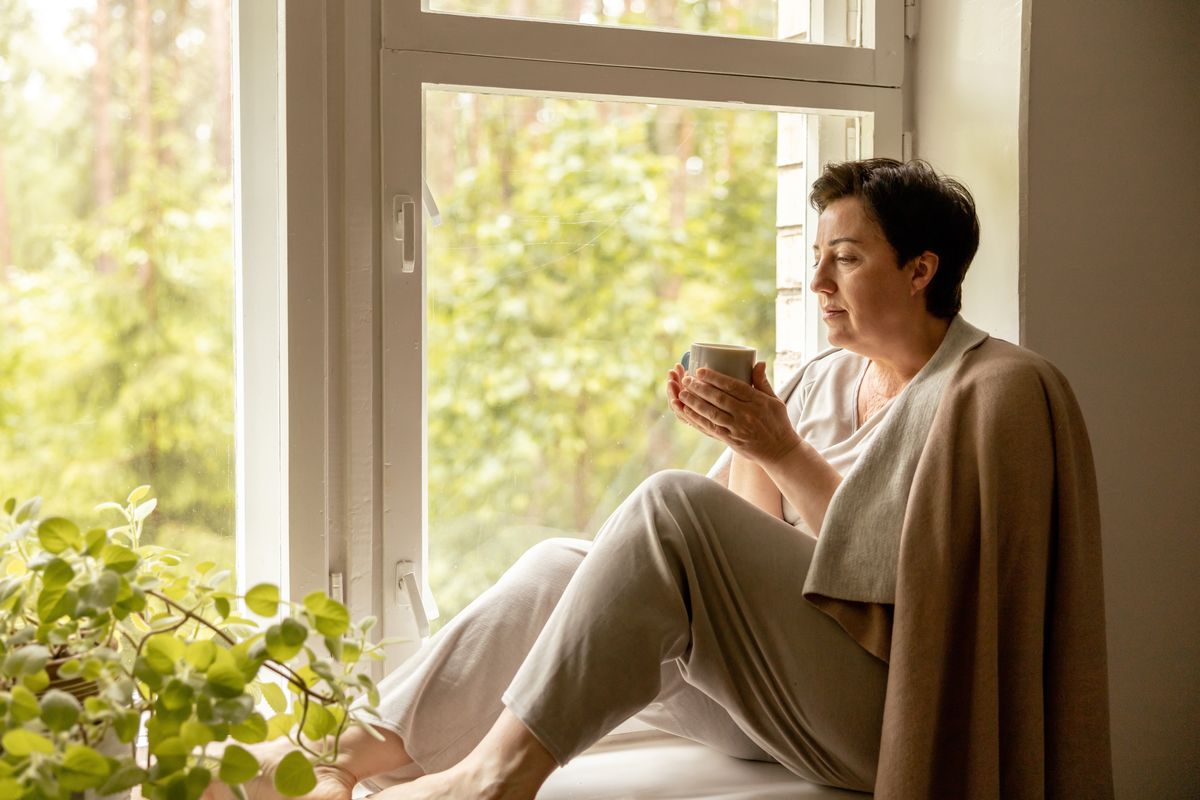
The morning practice is not complicated. It is simply this: before you give your attention to anyone else, give it to yourself. For ten minutes. That might mean sitting quietly. It might mean stretching. It might mean standing at the window with a cup of something warm, looking at the sky. It does not need to look like meditation. It just needs to be yours.
The evening is the other hinge. This is where most of us collapse. The day has been long, the to-do list is still half full, and so we numb. We scroll. We watch something we do not care about. We eat something we do not taste. We stay up too late doing nothing in particular because some part of us refuses to let the day end without getting something back.
But what if evening were not about getting something back? What if it were about putting things down?
The evening practice is the practice of removing. Screens off or dimmed. Stimulation reduced. The nervous system slowly guided from the buzzing alertness of the day toward the quiet that sleep requires. A warm drink. A few pages of a book. A conversation that is not about logistics.
In Traditional Chinese Medicine, these bookends map to specific organ systems. The morning hours — roughly 7 to 9 a.m. — are traditionally associated with the stomach and spleen, the organs of digestion and nourishment. This is when your body is most ready to receive. Feeding it noise and urgency first thing is like pouring ice water into a pot that is just beginning to warm.
The evening hours connect to the kidneys, the deepest energy reserves in the body. From a TCM perspective, the kidneys govern your fundamental vitality — the baseline energy that sustains everything else. When you override your evening tiredness, when you push past the body's signal to wind down, you draw from these reserves. Night after night, the well gets a little lower.
You do not need to know TCM theory for this to matter. You just need to protect the edges. Ten minutes in the morning. Thirty in the evening. That is enough to change the whole shape of a day.
Your phone is not the enemy. Let's get that out of the way.
The phone is a tool. It connects you to people you love. It plays music that moves you. It gives you directions when you are lost and answers when you are curious. The phone is not the problem.
The unconscious reach is the problem.
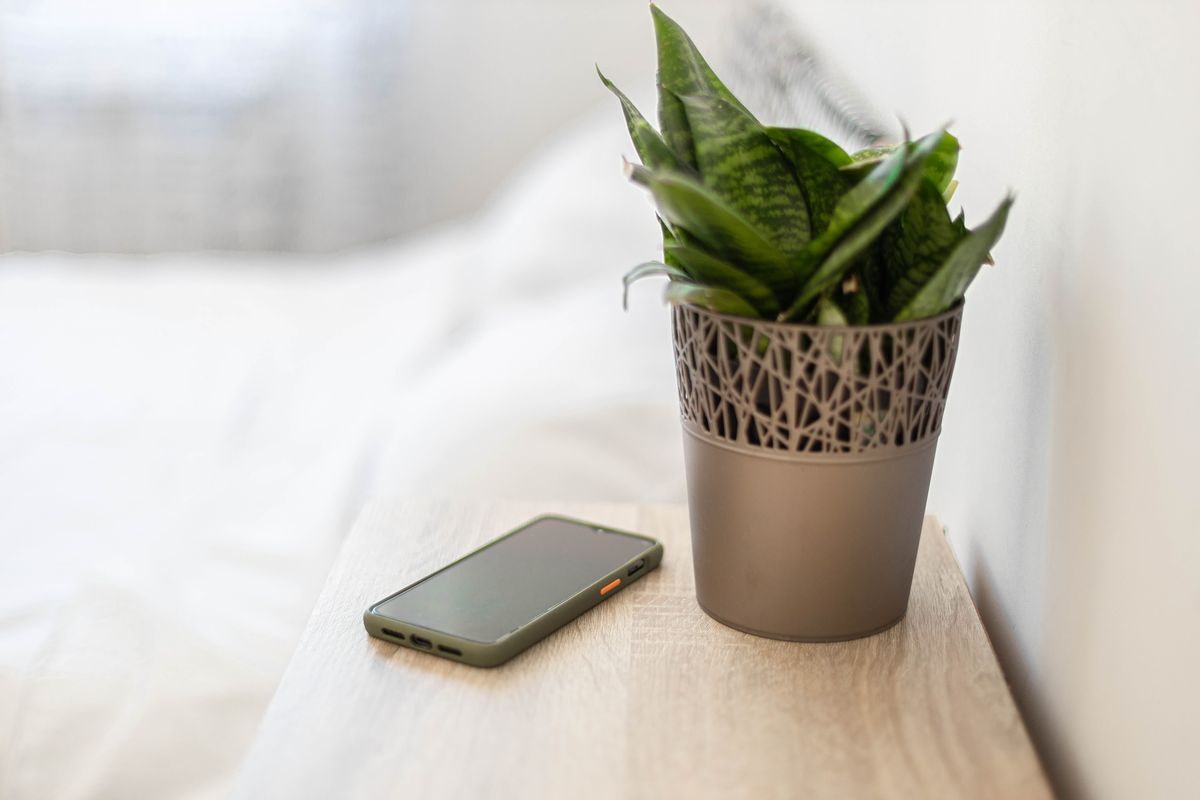
You know the reach. The hand that moves toward the phone before you have decided to pick it up. The thumb that opens an app before you have decided what you want from it. The scroll that starts as a quick check and ends forty minutes later with a vague sense of having lost something you cannot name.
This is not a willpower failure. It is an attention habit. And like all habits, it can be seen — and once seen, it starts to loosen.
Conscious living, in the realm of attention, comes down to one question: am I choosing this, or is it choosing me?
When you open your phone with intention — to call someone, to look something up, to read something specific — that is a choice. When you open it because your hand was bored and your mind was restless, that is a reflex. The practice is learning to notice the difference.
There is a broader question here too, one that goes beyond screens. Everything you take in — news, conversations, social media, podcasts, the ambient noise of a TV left on in the background — is food for your mind. And just like the food you eat, what you consume shapes how you feel.
An attention diet is not about restriction. It is about noticing the effect. After thirty minutes of news, do you feel informed or anxious? After an hour on social media, do you feel connected or hollow? After a day of constant input, do you feel enriched or wrung out?
You already know the answers. You just have not given yourself permission to act on them.
There is an old Taoist image of the mind as a pool of water. When it is still, it reflects clearly — the sky, the trees, whatever is actually there. When it is agitated, the reflection breaks apart and all you see is the disturbance itself. Most of our minds, most of the time, are agitated pools. Not because we are doing something wrong, but because we never stop stirring.
Single-tasking is one way to stop stirring. Do one thing. Just one. When you eat, eat. When you walk, walk. When you talk to someone, talk to someone. The modern instinct is to layer — podcast while cooking, email while eating, texting while someone is telling you about their day. Each layer seems efficient. But each layer also divides your attention, and divided attention is shallow attention, and shallow attention is shallow living.
There is also the matter of boredom. We treat boredom like a disease — something to cure immediately with stimulation. But boredom is often the mind's way of asking for space. It is the restlessness that precedes creativity, the emptiness that precedes insight. If you never let yourself be bored, you never let your mind settle. And a mind that never settles never sees clearly.
In Traditional Chinese Medicine, your body does not separate "mind stuff" from "body stuff." Your attention, your emotions, and your physical state are all expressions of the same energy — qi. When your attention is scattered, your qi scatters. When you are present — eating without distraction, breathing without multitasking, sitting without scrolling — your energy consolidates. This is why a simple meal eaten slowly can nourish you more than an expensive one eaten standing up. Presence is not a luxury. From a TCM standpoint, it is a basic form of self-care.
Walk into your kitchen right now. Stand in the doorway and just look.
What do you see? A clear counter with space to work? Or a pile of mail, three half-empty glasses, a charger that does not belong there, and the remains of a project someone started last weekend?
Now notice how you feel. Not what you think about the mess — how it makes your body feel. Is there a tightening? A small weight? A whisper of something like defeat?
Your space is not separate from your state. It is a mirror of it. And it works both ways — the mess reflects the scattered mind, and the scattered mind is reinforced by the mess. One feeds the other in a quiet, continuous loop that most of us have stopped noticing.
This is not about cleanliness for its own sake. It is about the relationship between your environment and your energy.
In Traditional Chinese Medicine and in the broader Taoist tradition, qi flows through spaces the way it flows through bodies. A room with good flow — clear pathways, natural light, air that moves — supports the person in it. A room that is cluttered, stale, or chaotic creates stagnation. Not metaphorically. You can feel it when you walk in.
There are three spaces that matter most: the kitchen, the desk, and the bedroom.
The kitchen is where you nourish yourself. When it is clear and inviting, you cook. When it is buried under a week of accumulated chaos, you order delivery and eat it standing up over the sink. The state of your kitchen is often the state of your relationship with self-care.
The desk — or wherever you work — is where your attention lives during the day. Clutter on the desk is information competing for your attention. Every sticky note, every open file, every object that does not belong is a small pull on your focus. You may not notice any single one. But together, they are a low-grade drain that runs all day.
The bedroom is where you surrender. It needs to feel safe, quiet, and separate from the rest of your life. When the bedroom doubles as an office or a storage room or a screen-viewing station, the signal to your nervous system gets confused. The room that is supposed to mean rest now means everything else too.
You do not need to overhaul your home. But you might try this: pick one surface. Your nightstand. Your kitchen counter. The chair where things pile up. Clear it completely. Put everything somewhere else for now — it does not matter where. Then live with that one clear surface for a day and notice how it feels.
That feeling is what space gives you. Not emptiness. Possibility.
The practice of shaping your environment with intention — choosing what stays and what goes, what faces you when you sit down, what greets you when you walk through the door — is a form of conscious living that requires no spiritual framework at all. You just notice, adjust, and pay attention to the result.

It is tempting to think of conscious living as a solo project. You meditate. You simplify. You tend your morning routine and curate your space and manage your attention. All of this happens inside your own bubble, on your own terms.
And then someone else walks into the room.
Your partner says something careless. Your child interrupts for the fourteenth time. Your friend cancels plans in a way that stings. And suddenly, all that carefully cultivated presence evaporates like steam.
This is not a failure of the practice. This is the practice.
Relationships are where conscious living gets honest. It is easy to be present when you are alone with a cup of tea and a quiet morning. It is much harder to be present when someone you love is being unreasonable, or boring, or needy in a way that makes you want to check your phone.
But presence with another person — real, full, undivided attention — is the most generous thing you can give. More than gifts. More than advice. More than fixing their problem. Just being there. Just listening. Just seeing them.
Most of us have never experienced this. We have conversations while cooking, while driving, while half-watching something on a screen. We give each other the scraps of our attention and wonder why we feel disconnected.
The practice in relationships is not about being a better communicator, though that may come. It is about showing up. Putting the phone face-down. Looking at the person. Hearing what they are saying without rehearsing your response while they talk.
There is a Taoist understanding of boundaries that is useful here. In the yin-yang framework, healthy relationships are not about merging. They are about two distinct energies meeting and creating something between them. Like riverbanks — the banks do not stop the river. They give it shape. They give it direction. Without banks, the river becomes a swamp.
Boundaries are not walls. They are the structure that allows real connection to flow. Saying no to what drains you is what makes it possible to say yes with your whole self. Speaking less — not out of withdrawal, but out of genuine listening — creates space for the other person to actually be heard.
This is not easy. It is, in many ways, the hardest part of conscious living. But it is also the part that matters most. Because a perfectly curated life lived in isolation is just a beautiful room with no one in it.
We have a deeply ingrained belief that rest is what you earn after the work is done. You push, you grind, you get through the list, and then — if there is time, if there is nothing left to do, if you have truly proven you deserve it — you rest.
This is backwards. And most of us know it is backwards, even as we keep doing it.
Rest is not the reward for a productive day. It is the foundation that makes any kind of meaningful day possible. Without rest, your attention is thin. Your patience is short. Your body runs on cortisol and caffeine, and your presence — that quality of actually being here — becomes impossible.
But not all rest is equal. There is a difference between rest, entertainment, and collapse.
Rest is restorative. It refills something. A nap. A slow walk. Sitting in the sun doing nothing. Ten minutes of quiet between tasks. You know it was rest because afterward you feel more like yourself, not less.
Entertainment is stimulation disguised as rest. Scrolling. Bingeing a show. Shopping online. It occupies the mind without restoring the body. You know it was entertainment because afterward you feel roughly the same — or slightly worse — than before.
Collapse is what happens when you have pushed so far past your limits that your body simply shuts down. You do not choose to rest. You crash. You sleep twelve hours and wake up groggy. You cancel everything and spend the weekend horizontal. Collapse is not rest. It is the body's emergency brake.
Most of us cycle between entertainment and collapse, never quite touching real rest. We do not know how to stop without numbing. We do not know how to be still without reaching for something to fill the stillness.
The practice is learning the difference. Learning to rest before you crash. Learning to sit with quiet instead of filling it. Learning that doing nothing — truly nothing, not scrolling-nothing or TV-nothing but actual nothing — is one of the most productive things you can do.
There is an ancient Taoist concept called wu wei — often translated as "non-doing" or "effortless action." It is, in some sense, the original argument against hustle culture. Not because effort is bad, but because the right effort at the right time is worth more than ten times the effort at the wrong time. And knowing when to stop is just as important as knowing when to push.
From a TCM perspective, rest is when your body does its deepest repair work. Your organs regenerate. Your qi consolidates. Your blood nourishes tissues that were depleted during the day. When you skip rest — when you override the tiredness signal and keep going — you interrupt this repair cycle. Once is fine. Twice is fine. But week after week, month after month, and the deficit builds into something that no weekend can fix.
Rest is not laziness. It is not giving up. It is the yin half of a life well lived — the dark, quiet, necessary counterpart to all your doing. Without it, the doing means nothing.
The Tao Te Ching suggests that the sage does less and accomplishes more. Not through tricks or hacks, but because attention that is gathered in one place has a force that scattered attention never will. Conscious living is not a modern invention — it is simply what life looks like when you stop trying to be everywhere at once and let yourself be fully where you are.
If you have read this far, you might be feeling one of two things. Either something has opened up — a quiet recognition, a sense of yes, this — or you are already overwhelmed, mentally sorting all of this into a new project with categories and milestones and a start date of Monday.
If it is the second one, stop. Breathe. This is not a project.
The fastest way to kill presence is to turn it into another thing on your list. Another area to optimize. Another self-improvement initiative with checkboxes and accountability and a ninety-day plan.
Conscious living is not something you achieve. It is something you return to — again and again, moment by moment, for the rest of your life. You will forget. You will drift. You will spend an entire Tuesday on autopilot and not realize it until Wednesday morning. That is fine. That is normal. That is, in fact, the whole point.
The practice is not about being present all the time. It is about noticing when you are not, and gently coming back.
So start with one thing. Just one.
If your mornings feel chaotic, start there. Give yourself ten minutes before the phone. See what happens.
If your evenings are a blur of screens and numbness, start there. Put the phone in another room at 9 p.m. Sit with whatever comes up.
If your home feels heavy, clear one surface. If your relationships feel thin, put the phone down during dinner. If you cannot remember the last time you truly rested, take a walk this afternoon with nothing in your ears.
One shift. One area. One small return to presence.
The Taoist tradition trusts small things. A single drop of water, given enough time, wears through stone. A seed does not try to become a tree all at once. It does the next thing, and the next thing, and the next thing, and one morning it is a tree.
You do not need to become a different person. You just need to start noticing the person you already are.
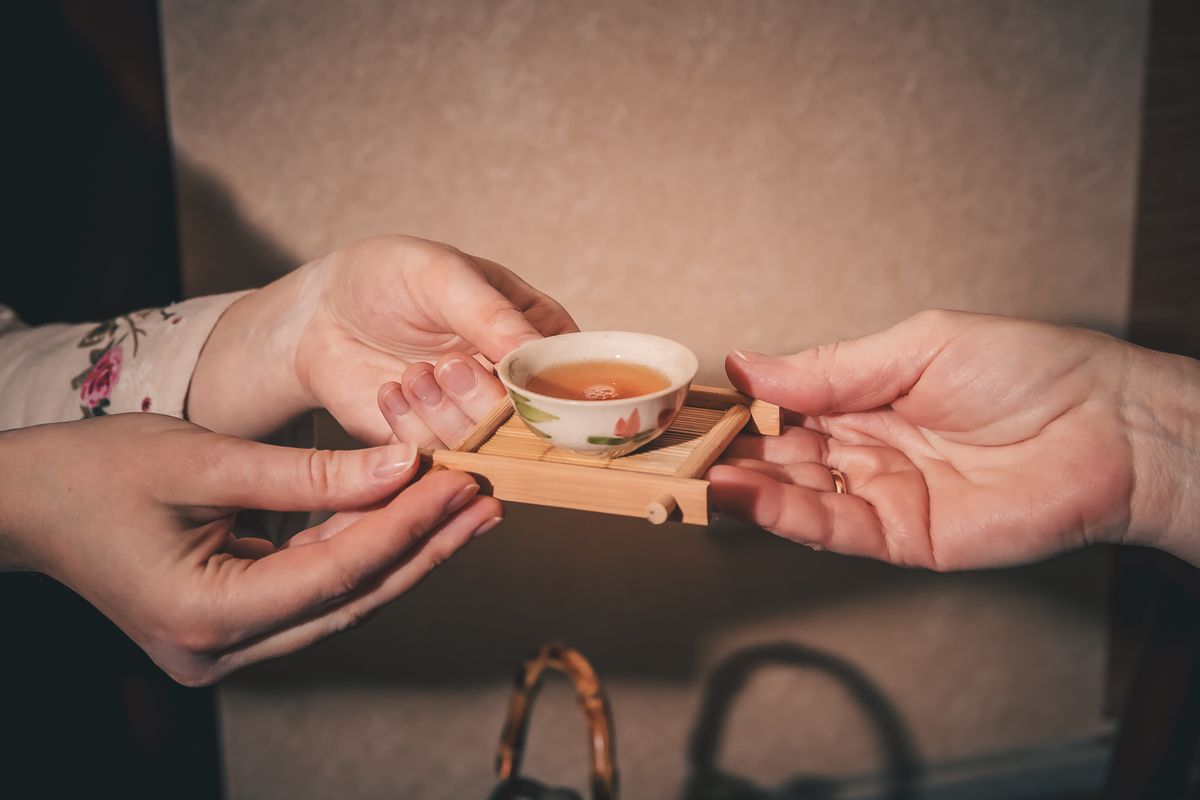
For a practice that grounds conscious living in the body, explore breath and movement. For one that grounds it in daily ritual, start with tea — which is, in its simplest form, the act of making one cup of something warm and drinking it without doing anything else.
Conscious living is not one-size-fits-all. The way back to presence depends on where you have drifted from it — and that looks different depending on your particular pattern of imbalance.
If you run cold and depleted, presence might look like sitting down. Actually sitting. Receiving warmth, rest, and nourishment without guilt. Your pattern pulls you toward giving until you are empty — presence, for you, is the practice of letting yourself be filled.
If you run hot and restless, presence is the practice of slowing down when every instinct says speed up. It is staying with one task instead of jumping to the next. It is the pause between the impulse and the action. Your energy is not the problem — the scattering of it is.
If you run heavy and foggy, presence is gentle activation. It is opening a window. Taking a short walk. Choosing a slightly cooler room. Your pattern pulls you inward and downward — presence, for you, is the small movement that breaks the spell.
If you run tight and stuck, presence is letting go. Of the plan. Of the list. Of the expectation of how things should be. Your pattern grips — presence, for you, is the long exhale that loosens the fist.
You do not need to read everything on this site. You do not need a plan. You need one thread to pull.
Here is what is waiting:
Rhythms — Morning and evening practices. Weekly patterns. The structures that hold a conscious life without making it rigid.
Attention — Your relationship with screens, information, and the quality of your focus. How to reclaim your attention without becoming a monk.
Rest — The lost art of stopping. How to tell the difference between rest and collapse, and why your body needs the real thing.
Space — Your physical environment as a practice. How to shape the places you live and work so they support the person you want to be.
Relationships — Presence with other people. Boundaries, listening, and the courage to show up without armor.
Not sure where to start? Pick the area that called to you — rhythms, attention, rest, space, or relationships — and begin there. One small shift. That is the whole practice.
You're sitting across from someone you love and you're both on your phones. This is the quiet way most relationships erode.

The problem was never your willpower. The problem is that someone else designed your morning for you.

You finally have a free afternoon. Within ten minutes you're cleaning the kitchen. Doing nothing is supposed to be easy — so why is it the hardest thing you've ever attempted?
You spend an hour choosing organic produce, then go home and spend three hours consuming content that leaves you anxious and numb.
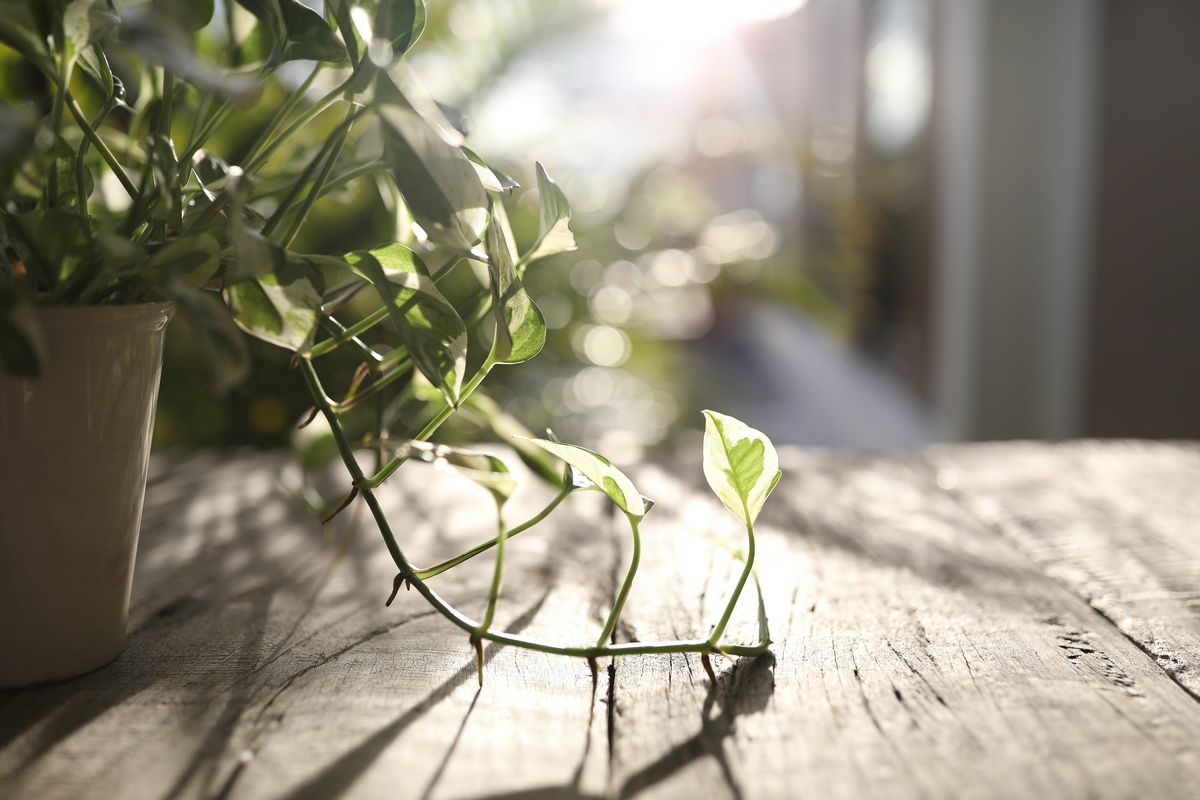
You walk into your kitchen and your shoulders tighten. That corner where you always exhale? That difference is not random.

Weekly insights on Taoist wisdom, seasonal living, and conscious nourishment — delivered gently to your inbox.
No spam. Unsubscribe anytime.