You know the feeling. You're doing everything right — the morning routine, the meal prep, the exercise, the therapy, the journaling — and somehow you're more exhausted than when you started.
You've read the books. Downloaded the apps. Optimized your sleep with a tracker that tells you exactly how badly you slept. You have a gratitude practice and a protein target and a screen-time limit you blow past every night because by 9 p.m. you are so depleted that scrolling is the only thing your brain can still do.
There's a word for what you're doing. You're swimming upstream. And there's a 2,500-year-old philosophy that would gently suggest you turn around and let the current carry you.
That philosophy is called the Tao.
It's not a religion, though some people practice it as one. It's not a self-help system, though it will help you. It's closer to a description of how life works when you stop fighting it — a set of observations about nature, energy, and the human body that were old before Rome was built.
And the strangest thing about it is this: most of what it says, you already know. You've just been taught to override it.
You know you should rest when you're tired. You know winter is not the time for new beginnings. You know that forcing a conversation never works, that the best ideas come when you stop thinking, that a walk fixes more than a plan.
The Tao didn't invent these truths. It just never forgot them.
The Current You've Been Swimming Against
Here is the modern condition, stripped bare: we live in a culture that treats every problem as a deficiency of effort. Tired? Try harder. Anxious? Do more yoga. Overweight? More discipline. Sad? Optimize your morning.
The instinct, always, is to add. Another supplement. Another habit. Another goal for the quarter. We stack solutions on top of problems and wonder why the pile keeps growing.
The Tao suggests something almost offensive in its simplicity: what if the problem isn't that you need to do more? What if the problem is that you need to remove what's in the way?
This is not a metaphor. Or rather, it is a metaphor — but it's also literally how your body works. Traditional Chinese Medicine, which grew directly from Taoist philosophy, doesn't see health as something you build. It sees health as something that's already there, flowing naturally, until something blocks it.
You don't create energy. You stop wasting it. You don't manufacture calm. You stop disturbing it. You don't build health from a pile of supplements and biohacks. You clear the way and let your body do what it has always known how to do.
The Tao is "the way" — often translated as the path, the current, the flow of things as they naturally are. It is not something you achieve. It is something you stop resisting.
Think about the last time everything felt easy. Not lazy-easy. Alive-easy. The afternoon you cooked without a recipe and it turned out perfect. The conversation that went somewhere real without anyone steering it. The walk where your mind finally went quiet and something in your chest unclenched.
That's not an accident. That's the current.
The entire Taoist tradition is, in some sense, a collection of ways to find that current more often and to notice when you've drifted out of it. It asks one question, over and over: are you flowing, or are you forcing?
If your body is telling you something and you keep arguing with it, you are forcing. If you are following a plan that looked good on paper but feels like sandpaper in your life, you are forcing. If everything you do to "get healthy" leaves you more exhausted — you already know the answer.
The Tao doesn't ask you to believe anything. It asks you to stop overriding what you already feel.
Wu Wei — What Happens When You Stop Forcing
Of all the ideas in Taoist philosophy, wu wei is the most misunderstood and the most useful.
It translates roughly as "non-doing" or "effortless action." And the moment you hear those words, every voice in your modern brain objects: Non-doing? I have a job. I have kids. I have a to-do list that could wallpaper a bathroom.
But wu wei doesn't mean doing nothing. It means not forcing. It means the difference between effort that flows and effort that fights.
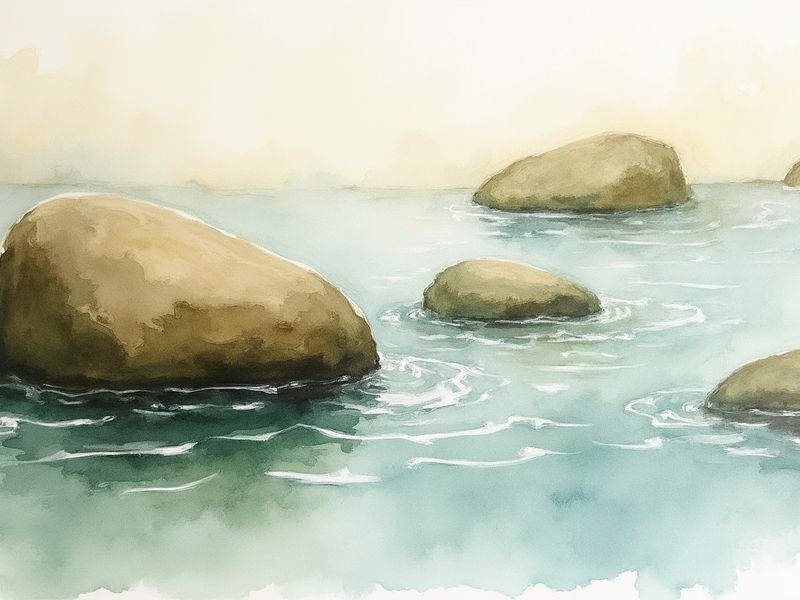
Think about water. Water is not lazy. It carved the Grand Canyon. It wears down mountains. It finds every crack and fills every gap. But it never forces. It doesn't push against a boulder — it goes around it. It doesn't strain upward — it follows gravity. It is the most powerful thing on earth, and it never tries.
That's wu wei.
Now think about your own life. Think about the white-knuckle grip on the steering wheel during a commute you hate. The morning routine you optimized to the minute — alarm, cold shower, journaling, meditation, smoothie — that you dread before you even open your eyes. The argument where you were right, you were clearly right, and you explained your point six different ways and the other person only got more stubborn.
That's forcing.
The difference isn't about intensity. You can work incredibly hard in a state of wu wei. Athletes call it flow. Musicians call it being in the pocket. Parents know it as the rare night when bedtime just... works, and nobody cried, and you have no idea what you did differently.
Wu wei is what happens when you align your effort with the direction things already want to go. It's planting in spring instead of January. It's having the hard conversation when both people are calm, not when you've been stewing for three days. It's eating warm soup in winter because your body wants it, not because a nutritionist told you to.
The Tao Te Ching says: "The sage does not compete, and therefore no one can compete with him." That sounds mystical. But try it in your kitchen. Stop competing with the recipe. Stop timing everything to perfection. Just cook — feel the heat, taste as you go, trust your hands. The food will be better. And more importantly, you will be better by the time you sit down to eat it.
There is so much more to say about wu wei — how it shows up in relationships, in work, in the way you relate to your own body. If this idea pulls at you, follow it deeper into wu wei: the art of effortless action.
Yin and Yang — Why "Balance" Doesn't Mean 50/50
You've seen the symbol a thousand times. On bumper stickers. On tattoos. On the cover of every vaguely Eastern book published since 1972. Two teardrops, one black, one white, chasing each other in a circle.
Most people understand it as "balance." Light and dark. Good and bad. Work and rest. Keep them equal and you'll be fine.
That's not wrong, exactly. But it misses the part that actually helps.
Yin and yang are not a prescription for balance. They are a diagnostic tool for recognizing imbalance — in your body, your life, your season, your day.
Yin is the cool, quiet, receptive, nourishing side of things. Night. Winter. Rest. Listening. The deep sleep that rebuilds you. Yang is the warm, active, expressive, moving side. Day. Summer. Effort. Speaking. The energy that gets you out of bed.
You need both. Obviously. But the insight of yin-yang theory is that they are not static. They are always shifting, always becoming each other. The longest day of summer contains within it the first turning toward darkness. The coldest night of winter holds the seed of spring. That's what the dots mean — the small circle of black in the white half, and the small circle of white in the black.
Every peak contains the seed of its valley. Every valley contains the seed of its peak.
This is not poetry for its own sake. It is a practical observation about how your body actually works.
When you've been in full yang mode for weeks — working late, exercising hard, socializing constantly, saying yes to everything — you will crash. Not because you're weak. Because that is how the cycle works. The crash is the yin reasserting itself. If you let it, if you rest before you break, the valley is shallow and the recovery is fast.
But if you fight it — if you drink more coffee, push through, add more commitments to prove you're fine — the valley deepens. The crash, when it finally comes, takes months to recover from.
Most of us are living in profound yang excess. Too much doing. Too much noise. Too much light, too much stimulation, too little darkness and silence and sleep. The Taoist answer isn't to swing to the other extreme and lie in a dark room for a year. It's to learn to read the signals — to feel when the tide is turning and to turn with it.
If you have been running hot — restless, irritable, waking at 3 a.m., mind racing — you are yang-excess and your body is begging for yin. Cool foods, quiet rooms, early bedtime, and the courage to cancel something.
If you have been sinking — heavy, foggy, unmotivated, sleeping ten hours and waking tired — you may be yin-excess, and your body needs gentle warmth, movement, and a reason to get outside.
Yin-yang is not a philosophy to admire from a distance. It is a lens you can hold up to your life right now, today, and see something useful. To explore how, start with yin and yang: reading the balance of your body.
The Five Elements — Nature's Patterns in Your Body
If yin and yang describe the rhythm of things — the endless pulse between rest and action, dark and light — then the five elements describe the shape of things. The particular quality of each phase of life.
In Taoist thought, the natural world expresses itself through five elemental patterns: Wood, Fire, Earth, Metal, and Water. These are not literal substances. They are archetypes — recognizable patterns that repeat across nature, the seasons, the human body, and the human personality.
Wood is spring. Growth. The upward push of a green shoot through hard soil. In your body, wood governs the liver and the emotion of anger — not destructive anger, but the healthy force that says no, this isn't right and pushes toward change. When wood is stuck, you feel frustrated, rigid, irritable. Things that should flow feel jammed.
Fire is summer. Joy. Connection. The heart and the warmth you feel in the presence of people you love. When fire is healthy, you are open and radiant. When it's unbalanced, you're either manic and scattered or closed off and numb.
Earth is late summer — that golden, heavy pause between the height of activity and the turn inward. Nourishment. Digestion. The stomach and spleen. When earth is strong, you feel grounded and cared for. When it's weak, you worry endlessly, overthink, and crave sweetness you can't satisfy.
Metal is autumn. Letting go. The lungs and the large intestine — the organs of release. Grief lives here, and also clarity. When metal is balanced, you can hold sadness without drowning in it. When it's stuck, you can't let go of anything: old clothes, old relationships, old stories about who you were supposed to be.
Water is winter. Stillness. The kidneys and the deep reserves of energy that sustain you through the dark months. Fear lives here — not panic, but the wise caution that keeps you alive. When water is depleted, you feel bone-tired and anxious in a way that no amount of sleep seems to fix.
These are not metaphors you paste onto your life. They are patterns you start to recognize once you know where to look. Why you always get sick in the fall. Why spring makes you restless. Why late summer fills you with a vague sadness you can never quite name.
Chapter 11 of the Tao Te Ching says something that has stayed with people for thousands of years:
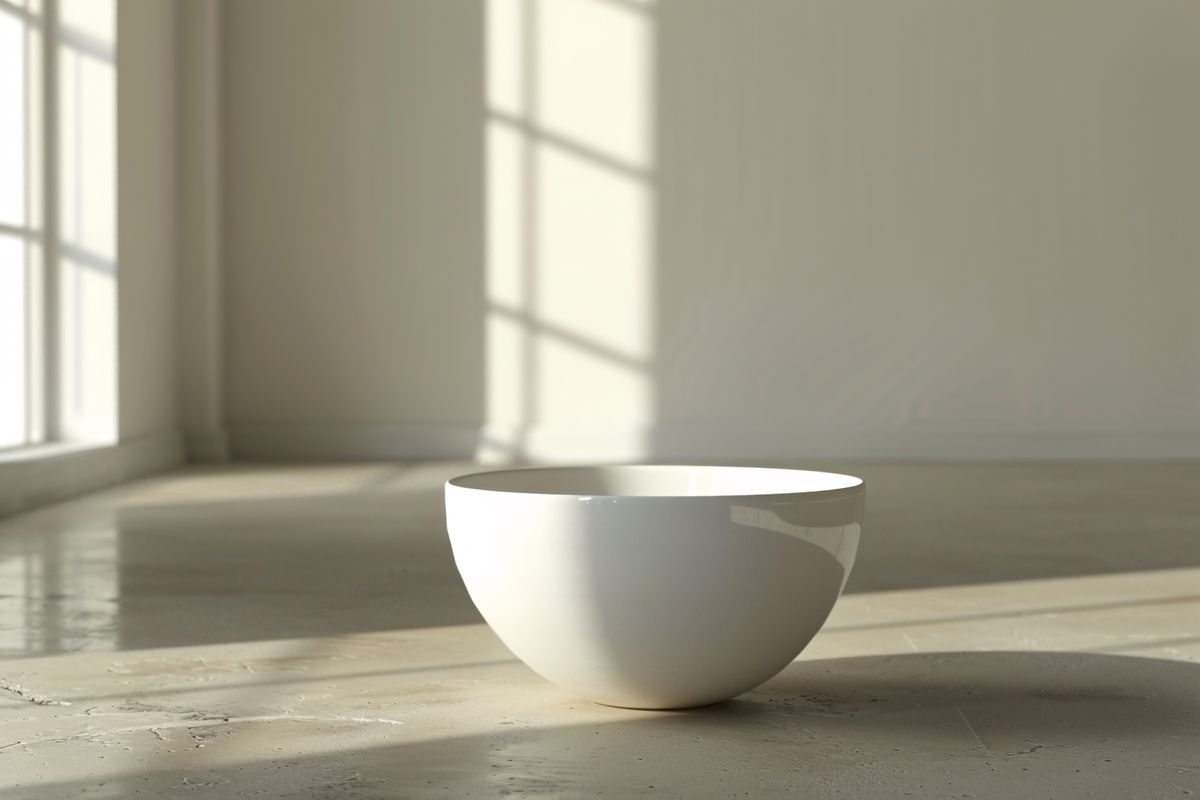
Thirty spokes share the wheel's hub. It is the center hole that makes it useful. Shape clay into a vessel. It is the space within that makes it useful. Cut doors and windows for a room. It is the holes that make it useful. Therefore, profit comes from what is there. Usefulness comes from what is not there.
Read that again slowly. Everything useful in your life depends on emptiness. The room is useful because of the space inside it. The cup is useful because it's hollow. The day is useful because of the gaps between appointments.
The Taoist idea of simplicity is not Instagram minimalism. It's not a white room with one chair and a single orchid. It's not about aesthetics at all.
It's about recognizing that accumulation — of things, of commitments, of opinions, of identities — weighs you down. Not morally. Physically. Energetically. Every object you own requires a small, continuous act of attention. Every commitment you make draws from a finite well.
Simplicity, in the Taoist sense, is the practice of creating space. Not because empty is better than full, but because without space, nothing can move. Qi cannot flow through a cluttered body any more than air can flow through a cluttered room.
This shows up in how you eat. Meals with fewer ingredients, simply prepared, are easier for your body to process than complicated dishes with twelve superfoods competing for attention. This shows up in how you live with the seasons. Winter is meant to be spare. If your December looks like your July, something is wrong.
And it shows up in the quiet beauty of imperfect, worn things. The chipped bowl you still love. The sweater with the fraying cuffs that fits your body better than anything new. The recipe your grandmother wrote on an index card that has more authority than any cookbook.
The Tao does not ask you to throw everything away. It asks you to notice what happens when you stop adding. To explore this practice in depth, visit simplicity: the power of having less.
This Is Not a Religion — It Is a Way of Seeing
The foundational text of Taoism is the Tao Te Ching, attributed to a figure called Lao Tzu — a name that simply means "old master." It contains 81 short chapters. Most are less than a page. Some are only a few lines.
You can read the entire thing in an hour. You could spend a lifetime with it and never finish.
It is not scripture. There is no orthodoxy. No one will test you on it. The Tao Te Ching makes no demands — it offers no commandments, no rules, no required practices. It simply describes what the author saw when he looked at the world very carefully and very honestly.
Some lines will hit you like a bell. Others will mean nothing. That's fine. That's exactly how it's supposed to work.
You don't need to study Taoism to benefit from it. You don't need to memorize anything or join anything or believe anything. You don't even need to read the Tao Te Ching, though you might find that it reads you.
What we've gathered on this site are the ideas from this tradition that have practical, felt, bodily relevance. The ones that change how you eat, rest, move, and relate to the seasons of the year and the seasons of your life. The ones that make you say: Oh. I already knew that. I just forgot.
Start with whatever pulls you. Trust the pull. That's the Tao working.
Where to Go From Here
This page is a starting point. The Taoist tradition is vast, but you don't need to learn it all. You need to find the thread that matters to you right now and follow it.
Here is what's waiting:
Wu Wei: The Art of Effortless Action — A deeper exploration of non-forcing. How to recognize it in your body, your relationships, and your daily choices. Why trying harder is sometimes the thing that's making everything worse.
Yin and Yang: Reading the Balance of Your Body — The diagnostic lens. How to tell whether you're running too hot or too cold, too wired or too depleted — and what to do about it in practical, everyday terms.
The Five Elements: Nature's Patterns in Your Body — The map of seasons, organs, emotions, and flavors. Why certain times of year always hit you the same way, and how to work with those patterns instead of against them.
Food as Medicine — Where Taoist philosophy meets your kitchen. How to choose foods based on what your body actually needs, not what a label says.
Seasonal Living — The art of living in rhythm with the year. Why fighting the seasons fights your own biology.
Here is the truth that sits under all of this: you already know most of it. You know when you need rest. You know when you need warmth. You know when something in your life has gone stale and needs to be released. You know what foods make you feel alive and what foods make you feel heavy.
You've just been taught to override all of it — to push through, power up, optimize, and perform.
The Tao asks nothing of you except this: stop overriding. Start listening. Turn around. The current was always there.
The Roots in Traditional Chinese Medicine
Traditional Chinese Medicine is the practical arm of Taoist philosophy. Where the Tao Te Ching speaks in poetry, TCM speaks in pulse readings and herbal formulas and the particular quality of your tongue coating on a Tuesday morning.
In TCM, health is not the absence of disease — it's the presence of flow. When qi moves smoothly through your meridians, you feel alive, clear, and capable. When it stagnates, you feel stuck, heavy, or wired. When it's depleted, you feel hollow.
Every concept on this page — wu wei, yin-yang, the five elements, simplicity — is also a diagnostic lens that TCM practitioners have used for centuries. The five elements map to your organs. Yin and yang map to your symptoms. Wu wei maps to the way your body heals: not by force, but by removing obstruction and letting the natural intelligence of your system do its work.
This is why food, movement, rest, and seasonal rhythms are not lifestyle hacks in the TCM tradition. They are medicine. The most fundamental kind.
A Note on the Tao
"The Tao that can be spoken is not the eternal Tao."
This opening line of the Tao Te Ching isn't trying to be mysterious. It's saying something simple: the deepest truths cannot be captured in a system, a plan, or a brand. They can only be lived.
Everything on this site — every article, every recipe, every seasonal guide — is a finger pointing at the moon. The moon is your own experience. Your own body. Your own quiet knowing.
Don't mistake the finger for the moon.
Which Pattern Fits You Right Now?
Taoist philosophy meets your body through four common patterns of imbalance. You might recognize yourself in one — or in a combination that shifts with the seasons.
Cold and Depleted — Always tired. Cold hands. Craving warmth and comfort. Your fire has burned low and needs tending, not pushing.
Hot and Restless — Wired but tired. Racing thoughts. Trouble sleeping. Too much yang with nowhere to go. You need cooling, not more fuel.
Heavy and Foggy — Brain fog. Sluggish digestion. A heaviness that sleep doesn't fix. Dampness has accumulated and needs gentle movement and warmth to clear.
Tight and Stuck — Tension headaches. Irritability. The feeling that everything is jammed. Qi isn't flowing and needs space, release, and sometimes just a long exhale.
Wherever you land, the approach is the same: don't fight the pattern. Understand it. Work with it. Let it teach you what you need.