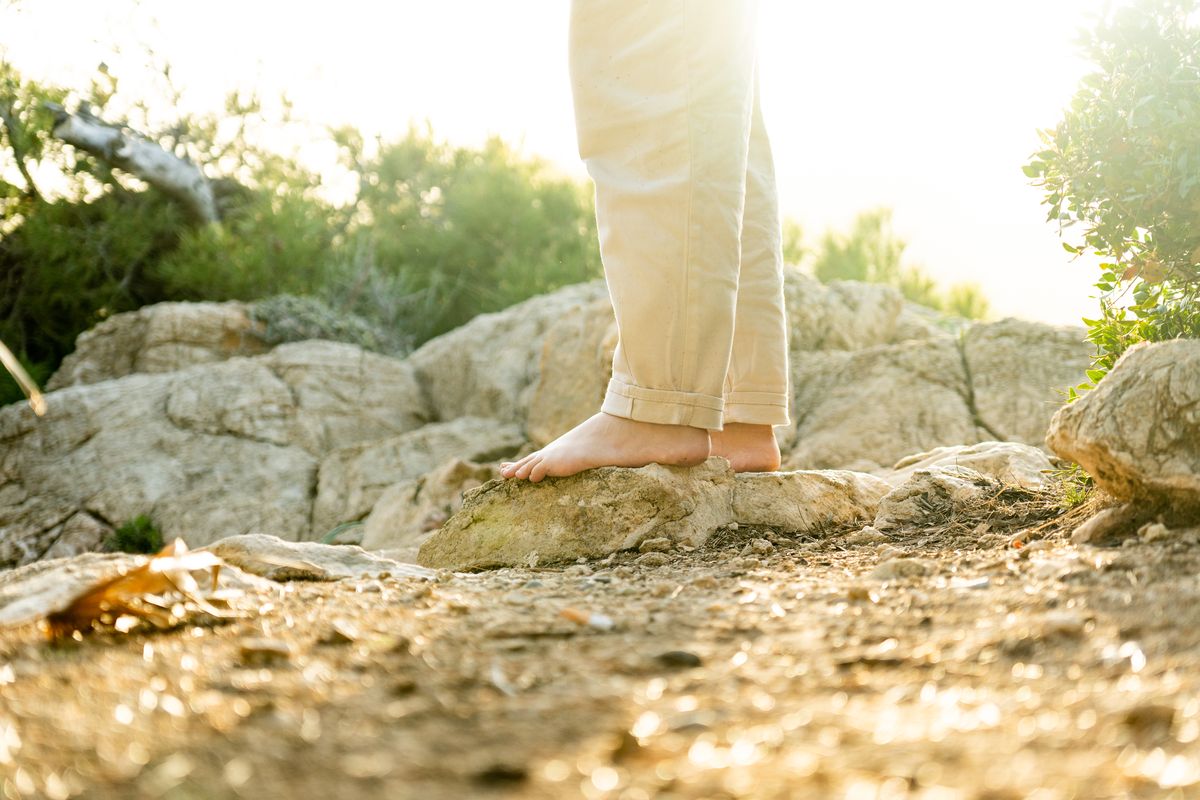
Qi Gong, Walking, Stretching: Movement That Actually Gives You Energy
What if the reason you are tired after exercise is not that you are out of shape — but that you are doing the wrong kind of movement for your body right now?
What if the reason you are tired after exercise is not that you are out of shape — but that you are doing the wrong kind of movement for your body right now?
Most of us grew up with one model of exercise: push harder, go faster, do more reps. If it does not hurt, it is not working. If you are not drenched in sweat and gasping at the end, you did not try hard enough.
But there is a whole tradition of movement practices — thousands of years old, tested across billions of bodies — designed to leave you with more energy than you started with. Not harder. Not faster. Not more reps. Just movement that builds instead of burns.
Movement That Builds vs. Movement That Burns
The Western fitness model is built on a simple premise: stress the body, then let it recover stronger. It works. For some people, at some times, in some seasons of life, it works beautifully.
But it is not the only way. And for many people — especially those who are already exhausted, already stressed, already running on empty — it is the wrong way. You cannot build a fire by blowing on ashes. You have to add kindling first.
The Traditional Chinese Medicine model of movement starts from a different place entirely. Movement is not about burning calories or building muscle mass. It is about moving qi — your vital energy — through the channels of the body. When qi flows, you feel alive, clear, and calm. When it stagnates, you feel stiff, heavy, irritable, or stuck.
Here is the simplest test you will ever need: how do you feel thirty minutes after you stop moving?
If you feel energized, clear-headed, and calm — whatever you are doing is working for your body right now. If you feel drained, heavy, or wired-but-exhausted — you are spending energy you do not have.
This is not about being lazy. It is about being honest. And it is the starting point for everything in the Body, Breath & Movement path.
The kind of movement that builds energy is not mysterious. It is slow, deliberate, connected to breath, and usually quiet. It looks like nothing from the outside. But on the inside, it is moving rivers.
To understand why this works, it helps to know what qi actually is and how it moves through your body.
Qi Gong: Moving Meditation for Everyone
Qi gong means, literally, "energy work." It is the oldest continuous movement practice on the planet. People have been doing it in parks, on mountaintops, and in living rooms for thousands of years.
It looks deceptively simple. Slow movements. Deep breathing. Standing in one place. From the outside, it barely registers as exercise. From the inside, it is one of the most powerful things you can do for your body and your mind.
You do not need to be flexible. You do not need to be young. You do not need to be fit. You do not need any equipment, any space, or any previous experience. You just need to be willing to slow down.
Three foundational practices will give you everything you need to start:
Standing meditation. You stand still. That is it. Feet shoulder-width apart, knees slightly bent, arms relaxed at your sides or held gently in front of you as if hugging a tree. You breathe. You stand. And over the course of five, ten, twenty minutes, something remarkable happens — you begin to feel the energy in your own body. The tingling in your palms. The warmth in your belly. The subtle current running through your legs. This is not imagination. It is attention meeting qi for the first time. Explore standing meditation as a standalone practice.
Flowing arms. Standing in the same relaxed posture, you begin to move your arms slowly — forward and back, side to side, in gentle circles. The movement follows the breath. Inhale, arms rise. Exhale, arms fall. There is no effort. The arms feel almost weightless, as if the breath is doing the lifting. This is qi gong at its most essential: breath and movement married together, with your mind quietly witnessing both.
Shaking. This one surprises people. You stand with soft knees and begin to bounce gently, letting your whole body shake. Arms loose. Jaw loose. Shoulders loose. Everything vibrates. It looks ridiculous. It feels incredible. Two minutes of shaking can release tension that a full massage cannot reach. It is the body's natural reset — animals do it instinctively after a stressful encounter. We forgot how. Time to remember. Read more about the practice of shaking.
If you want a complete sequence to follow, the morning qi gong routine combines these elements into a ten-minute practice you can do before breakfast. And the Eight Brocades — the most famous qi gong set in the world — gives you a structured form that has been refined over centuries.

Walking as Meditation
You already know how to walk. But there is a difference between walking to get somewhere and walking to arrive where you already are.
Meditative walking is slow. Deliberate. There is no destination. No podcast. No phone. No route that needs completing. You walk because walking is the thing you are doing, not the thing between two other things.
The Taoist tradition has a long love affair with purposeless walking. Wandering without a goal. Following whatever path looks interesting. Stopping to watch a bird. Turning around for no reason. This is not wasted time. This is the body and mind synchronizing, step by step, breath by breath.
You do not need a forest or a mountain trail, though those help. A sidewalk works. A hallway works. Your backyard works. The only requirement is that you leave the phone behind — or at least in your pocket, silenced — and walk slowly enough to actually feel your feet touching the ground.
Start with ten minutes. Walk at half your normal speed. Feel the heel, the ball, the toes. Feel the air on your skin. Notice what your mind does when it has nowhere to be and nothing to consume.
It will resist at first. That is fine. Let it resist. Keep walking. Somewhere around the seven-minute mark, something usually shifts. The mental noise softens. The body finds its rhythm. And you realize that this — just this — is enough.
Walking this way is one of the most accessible practices in Conscious Living. It costs nothing, requires nothing, and works every time.
Stretching and Yin Yoga
Most stretching lasts thirty seconds. You reach for your toes, bounce a few times, and move on. This is fine for warming up before a run. It does not go deep enough to change anything.
Yin yoga and deep stretching work differently. You find a position. You hold it. Not for thirty seconds — for three to five minutes. Sometimes longer.
In those long minutes, something happens that cannot happen in a quick stretch. The muscles, which are designed to resist, eventually give up and relax. And then the stretch reaches deeper — into the fascia, the connective tissue, the layers of the body that hold tension you did not know you were carrying. Old tension. Emotional tension. The kind that lives in your hips and your shoulders and the backs of your knees and has been there so long you forgot it was not normal.
This is not comfortable. Yin yoga is not the gentle, relaxing practice people expect it to be. It is gentle in its movements, yes. But three minutes in a deep hip opener, face to face with the discomfort you have been storing there, is one of the most honest things you can do.
What makes this more than just flexibility training is the TCM dimension. Yin yoga poses are designed to follow the meridian lines — the channels through which qi flows. A forward fold does not just stretch your hamstrings. It runs along the Bladder meridian, which governs the entire back body and connects to the kidneys, the root of your deepest energy reserves. A hip opener follows the Liver and Gallbladder meridians, releasing the physical tension that comes with emotional stagnation.
You do not need to know any of this for the practice to work. But knowing it explains why you sometimes feel emotional after holding a stretch for a long time. It is not just muscle tissue releasing. It is everything that was held in that tissue.
For a full exploration of how this works, read Yin Yoga Explained.
Movement by Archetype
Not every gentle movement is right for every body. What your body needs depends on where you are right now — your current pattern, your current imbalance, the thing that is most out of balance today.
Here is a simple guide based on the four archetypes.
Cold and Depleted. You are tired. You are cold. Your energy is low and your motivation is lower. You need warmth and gentle building — not anything that will drain the little reserves you have. Best practices: gentle qi gong, especially standing meditation and slow flowing movements. Short, slow walks in sunlight. Avoid vigorous shaking or anything that leaves you more tired than when you started. Build slowly. Five minutes is enough. Ten is generous.
Hot and Restless. You are wired, irritable, running hot. Your mind is racing. Your body is tense but in an agitated way, not a heavy way. You need cooling, calming movement that discharges excess energy without stoking the fire. Best practices: yin yoga, especially forward folds and hip openers. Slow walking, particularly near water or trees. Gentle stretching. Avoid anything competitive, fast, or that raises your heart rate significantly. You need to come down, not ramp up.
Heavy and Foggy. You feel sluggish, bloated, mentally cloudy. Everything is damp and stuck. You need movement that is slightly more vigorous — enough to shake things loose without being overwhelming. Best practices: brisk walking (not running, just walking with purpose), shaking qi gong, and dynamic stretching. The shaking practice is especially good here — it literally shakes dampness loose. Move enough to break a light sweat if you can. That is your body processing what is stuck.
Tight and Stuck. You are tense, frustrated, emotionally compressed. Things need to move but feel locked. You need movement that opens and releases — that creates space in the body for the stuck energy to flow again. Best practices: stretching, especially chest openers and hip openers. Shaking qi gong. Dancing — seriously. Put on music and move without a plan. Let the body find its own way to unwind. Twisting movements are also excellent for wringing out stagnation.
The Seasonal Dimension
Your body does not need the same kind of movement in January that it needs in July. This seems obvious, but most exercise programs ignore it entirely.
In the Taoist view, your movement should mirror the energy of the season.
Spring is rising, expansive energy. This is the time to increase movement — more vigorous qi gong, longer walks, stretching that opens the sides of the body (the Liver and Gallbladder meridians, which correspond to spring). Your body wants to move after the stillness of winter. Let it.
Summer is full, outward energy. Movement can be moderate and joyful — swimming, walking in the early morning or evening, flowing qi gong. Avoid intense exertion in the heat of the day. Summer asks for expression, not exhaustion.
Autumn is the beginning of turning inward. Start to slow down. Shorter walks. Gentler stretching. More yin yoga. The energy is beginning to consolidate, and your movement should follow. This is not the season for new personal records.
Winter is stillness. This is the season for the quietest practices — standing meditation, slow stretching, very gentle qi gong, short walks bundled up warm. Winter is when the body rebuilds its deepest reserves. Intense exercise in winter spends what should be saved. Less is genuinely more.
For a deeper exploration of how to align all your practices — not just movement — with the rhythm of the year, the Seasonal Living path covers this in detail.
In Traditional Chinese Medicine, qi stagnation is the root of most everyday discomfort. Pain, tension, irritability, bloating, brain fog, emotional compression — these are all, at some level, expressions of qi that has stopped flowing. Qi is like a river. When it flows, the water stays clear, the banks stay healthy, and everything downstream gets what it needs. When it stagnates, the water grows murky, things accumulate where they should not, and eventually something overflows or dries up. Gentle movement keeps the river flowing. A ten-minute qi gong session can do more for your body than a sixty-minute gym workout — not because it is more physically demanding, but because it addresses flow rather than force. The gym workout builds the banks of the river. Qi gong clears the riverbed. Both matter. But if the water is not moving, stronger banks will not help.
Where to Start
You do not need a program. You do not need equipment. You do not need to clear your schedule.
You need five minutes and a willingness to move slowly.
Tomorrow morning, before you check your phone, stand in your kitchen. Feet shoulder-width apart. Knees slightly bent. Hands at your sides. Breathe in slowly through your nose. Breathe out slowly through your mouth. Do this for two minutes.
Then let your arms begin to swing gently — forward and back, following the breath. Two more minutes.
Then shake. Bounce gently on your heels and let everything wobble. One minute.
Five minutes total. Notice how you feel afterward. Not during — afterward. Give it thirty minutes. If you feel more awake, more clear, more settled than you normally do at that hour, you have just discovered something that no amount of reading can teach you.
The body already knows how to heal itself. It just needs you to stop getting in the way — and start moving with it instead of against it.