You have been told your body is a machine. Fuel it right, push it hard, optimize every output. Track the steps, count the calories, measure the sleep, and if something feels off — push through it. Rest when you are dead. No pain, no gain.
And so you push. You grind through workouts that leave you flattened. You override tiredness with caffeine. You sit at a desk for nine hours and then try to undo the damage with sixty minutes of intensity. And when your body protests — the tight neck, the shallow breathing, the exhaustion that sleep does not fix — you assume you are doing something wrong. Not enough discipline. Not enough effort.
But what if the whole framework is wrong?
What if your body is not a machine at all? What if it is more like a garden — something that needs tending, seasons, rest, and the right kind of attention at the right time?
A machine runs at the same speed until it breaks. A garden grows in cycles. It needs sunlight and rain, warmth and cold, activity and dormancy. You do not yell at a garden for not producing tomatoes in January. You do not force a seed open to make it grow faster.
Your body has its own intelligence. It knows when to be active and when to rest. It knows how to heal, how to digest, how to sleep — if you let it. The problem is not that your body is broken. The problem is that you have been listening to the wrong instructions.
In Traditional Chinese Medicine, this intelligence has been understood for thousands of years. The body is not a collection of parts to be managed. It is a living system with its own rhythms, its own signals, its own deep wisdom. The practice is not to override that wisdom. The practice is to listen to it.
This pillar is about listening. About movement that builds energy instead of draining it. About breath that connects your mind and body instead of running on autopilot. About rest that actually restores. And about finding the approach that fits your particular body — not someone else's ideal.
What Is Qi? (A Thirty-Second Version)
You already know what qi is. You just might not have a word for it.
Think of the difference between a day when you wake up and feel alive — clear-headed, motivated, warm in your hands and feet, ready to move — and a day when you drag yourself out of bed feeling flat, foggy, and like someone turned your dimmer switch down.
The difference is not calories. It is not sleep hours. It is not whether you had coffee yet.
That difference — the felt sense of aliveness versus flatness — is what Chinese medicine calls qi. It is not mystical. It is not invisible energy floating around in the air. It is the functional vitality of your body. The thing that makes the difference between being technically alive and actually feeling alive.
When your qi is flowing well, you have energy without being wired. You feel warm but not overheated. Your digestion works. Your mind is clear. Your body wants to move.
When your qi is stuck, depleted, or scattered, you feel it — even if you cannot name it. The afternoon slump that no amount of coffee fixes. The tight shoulders that never release. The brain fog that descends after lunch and does not lift until the next morning.
There is a whole deeper exploration of qi waiting for you when you are ready. For now, just know this: qi is real in the way that hunger is real and tiredness is real. You do not need to believe in it. You just need to notice it.
And qi does not only come from breath and movement. It comes from the food you eat too — which is why what you put on your plate and how you eat it matters just as much as whether you moved today.
Movement as Cultivation, Not Punishment
Somewhere along the way, we decided that exercise should hurt. That the measure of a good workout is how destroyed you feel afterward. That sweat equals virtue and soreness equals progress.
There is a place for intensity. But for most of us, most of the time, the kind of movement that actually builds energy is far gentler than we have been taught.
Think about it this way. If your body is a garden, intense exercise is like a thunderstorm. Occasionally useful. Sometimes necessary. But if it storms every day, the soil erodes, the roots get waterlogged, and the plants start to drown. What a garden needs most is steady, gentle rain.
In Traditional Chinese Medicine, movement is understood as a way to circulate qi — to keep energy flowing through the body so it does not stagnate. But the emphasis is on circulation, not depletion. A twenty-minute walk does more for your qi than an hour of high-intensity training that leaves you wiped out.
This is not laziness. This is a fundamentally different understanding of what movement is for. In the Western model, exercise is about burning — burning calories, burning fat, burning through your energy reserves. In the TCM model, movement is about building. Building circulation. Building warmth. Building the steady, sustainable vitality that carries you through a full day without crashing at three in the afternoon.
Gentle movement — walking, stretching, qi gong, tai chi, slow yoga — does something that intense exercise often cannot. It activates the body without triggering the stress response. Your heart rate rises gently. Your muscles warm. Your joints lubricate. Your breath deepens naturally, without gasping. And when you finish, you feel more energized than when you started, not less.
This matters especially if you are already depleted. If you are running on fumes — sleeping poorly, stressed at work, eating on the go — adding an intense workout is like asking a tired horse to sprint. It will do it. But at a cost.
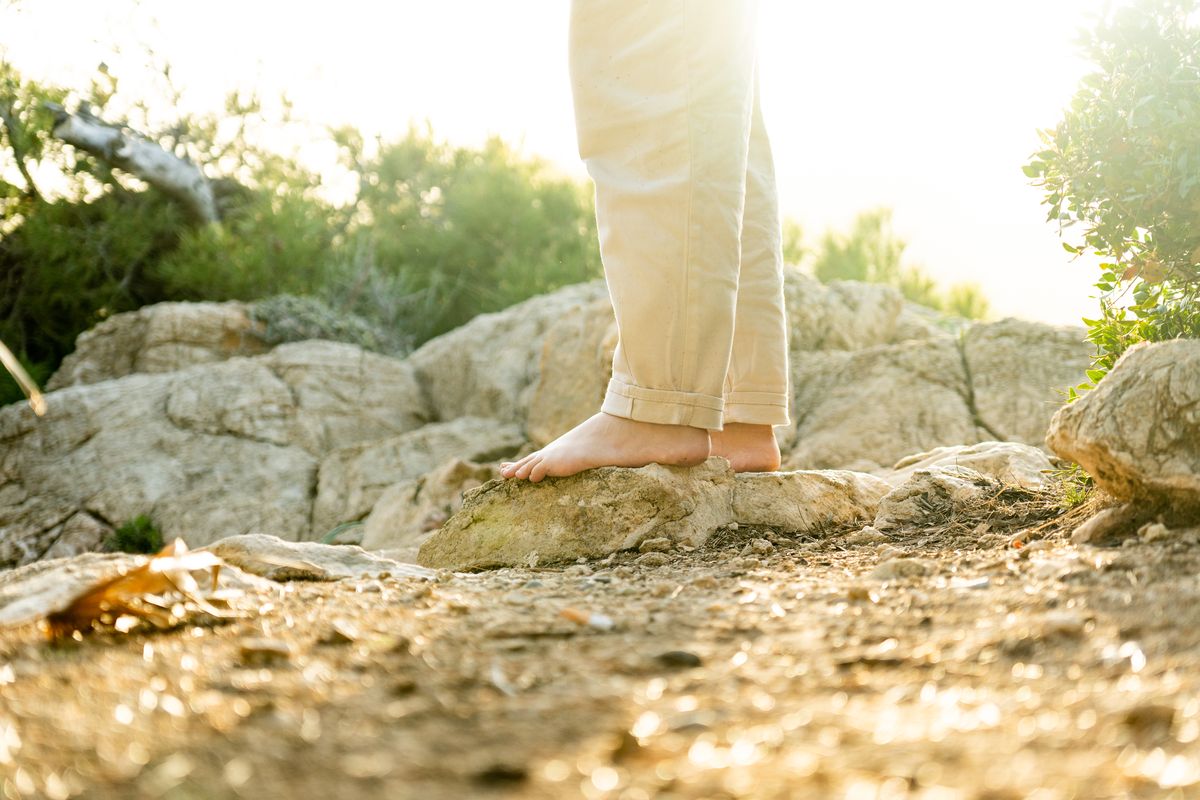
There is a whole world of gentle movement practices that work with your body instead of against it. Walking in nature. Simple stretches. Flowing sequences that feel more like play than punishment. Movement that leaves you warm, open, and alive.
The kind of movement you need also shifts with the seasons. Winter asks for slower, more inward practices. Spring invites more expansive, rising energy. Summer can handle more intensity. Autumn is a time to pull back and consolidate. When you move in rhythm with the natural world, the body responds with a kind of grateful ease.
Start where you are. If you have not moved in months, a ten-minute walk is enough. If you are already active, try replacing one intense session with something slow and gentle and see how you feel the next day. The body knows the difference. Trust it.
Breath as the Bridge Between Body and Mind
Here is something remarkable about breathing: it is the only function in your body that is both completely automatic and completely voluntary.
Your heart beats on its own — you cannot decide to speed it up or slow it down. Your digestion runs without your input. Your immune system works while you sleep. But your breath? Your breath does both. It breathes itself all day and all night without a single conscious thought. And yet, the moment you choose to, you can change it. Slower. Deeper. Faster. Held. Released.
This makes the breath a bridge. It sits at the exact intersection of the involuntary and the voluntary, the unconscious and the conscious, the body and the mind. When you change your breath, you change your state. Not in theory. Immediately.
You have felt this. When you are anxious, your breath is shallow and fast. When you are calm, it is slow and deep. But here is the part most people miss: it works in reverse too. If you deliberately slow your breath, your nervous system responds as if you are calm — even if you were not a moment ago. If you deepen your exhale, your heart rate drops. Your muscles soften. Your mind quiets.
This is not a hack. It is not a trick. It is the basic architecture of your nervous system. The breath is the remote control you have been carrying in your pocket your entire life without knowing it.
Here are three breaths to try right now. Not as a practice or a commitment. Just as an experiment.
The long exhale. Breathe in through your nose for a count of four. Breathe out through your nose for a count of six or eight. The exhale is the key — it activates the part of your nervous system that says you are safe, you can rest. Do this three times and notice what shifts.
The belly breath. Place one hand on your chest and one on your belly. Breathe so that only the bottom hand moves. Most of us breathe into the chest — shallow, tight, anxious breathing. Belly breathing drops the breath lower, into the diaphragm, where it signals the body to relax.
The pause breath. Breathe in. Pause for two seconds. Breathe out. Pause for two seconds. The pauses are the secret. They give the nervous system a moment to reset between each cycle. Four breaths like this can shift you from reactive to responsive.
There is an entire practice of breath that goes deeper than these entry points — breath for energy, breath for sleep, breath for emotional regulation. But these three are enough to start with. They cost nothing, take less than a minute, and they work every single time.
Rest as the Most Underrated Practice
We need to talk about rest. Not sleep — although sleep matters enormously. Rest. The broader, deeper practice of stopping.
Most of us do not rest. We collapse. There is a difference.
Collapse happens when you have pushed so far past your limits that your body gives you no choice. You crash on the couch. You sleep twelve hours and wake up groggy. You cancel everything and spend the weekend doing nothing — not because you chose to, but because you physically cannot do anything else.
That is not rest. That is your body's emergency brake.
Real rest is a practice. It is chosen. It is conscious. And it happens not after everything is done — because everything is never done — but in the middle of things, as a deliberate act of nourishment.
Rest can be ten minutes of silence between meetings. It can be sitting in the sun with your eyes closed. It can be lying on the floor with your legs up the wall and your phone in another room. It can be a slow evening with no agenda — no screens, no productivity, no entertainment even. Just the radical act of doing nothing and letting it be enough.
In Traditional Chinese Medicine, rest is not passive. It is when the body does its most important work. During rest, your organs regenerate. Your qi consolidates. Your blood nourishes tissues that were depleted during the active hours. The organ clock — a central concept in TCM — maps specific repair functions to specific hours of the night. Between 1 and 3 a.m., for instance, the liver does its deepest cleansing. Between 3 and 5 a.m., the lungs replenish. When you consistently override your body's signal to sleep during these windows, you interrupt repair cycles that no supplement or weekend lie-in can replace.
There is a deeper exploration of rest and sleep practices waiting for you — including how to wind down, how to work with the organ clock, and how to tell the difference between rest and numbing.
But the principle is simple: rest is not what you earn after the work is done. Rest is what makes the work possible.
The Taoist tradition has a word for this: wu wei. It is often translated as "non-doing" or "effortless action." It does not mean being lazy. It means knowing when to act and when to yield. Knowing when to push and when to let go. Knowing that sometimes the most powerful thing you can do is nothing at all.
And if you are looking for a bridge between activity and rest, between doing and being, there is always tea. The simple act of boiling water, steeping leaves, and sitting with a warm cup — doing nothing else — is one of the oldest rest practices in the world.
Why This Works — TCM Perspective
In Traditional Chinese Medicine, qi is often compared to water in a garden's irrigation system. When it flows freely through the channels, everything grows — your organs function well, your mind is clear, your body is warm and responsive. Movement keeps the water flowing, preventing the stagnation that leads to pain, tension, and fatigue. Breath is the pump that drives the water through the system, reaching the places that movement alone cannot. And rest is when the reservoir refills — without it, you are irrigating from an empty well. The three work together. Movement without rest depletes the reservoir. Rest without movement lets the channels clog. Breath without either is a pump running dry. When all three are in balance, the garden thrives.
Going Deeper — The Tao Perspective
The Tao Te Ching speaks of the softest things in the world overcoming the hardest. Water wears away stone — not through force, but through persistence and yielding. The tongue outlasts the teeth. The supple survives what the rigid cannot. Your body heals not through force but through yielding. The gentle stretch reaches deeper than the aggressive one. The slow breath calms what the clenched jaw cannot. The nap restores what the extra hour of work destroys. This is not weakness. In the Taoist understanding, softness is the ultimate strength. The newborn is soft and flexible; the dead are hard and stiff. To practice gentleness with your own body is to align with the deepest current of life itself.
The Archetype Dimension — Different Bodies Need Different Things
Not every body needs the same thing. This might seem obvious, but the entire fitness and wellness industry is built on the assumption that there is one right way — one ideal workout, one optimal sleep schedule, one correct way to breathe.
There is not.
In Traditional Chinese Medicine, your body has particular tendencies — patterns of energy that shape how you feel, what you need, and what helps versus what makes things worse. These patterns are not fixed labels. They shift with seasons, stress, diet, and life stage. But knowing your tendency helps you choose movement, breath, and rest practices that actually work for you instead of working against you.
Who Is This For?
If you run cold and depleted, your energy is low and your body craves warmth. Intense exercise will drain you further — it is like asking a candle to burn brighter when the wick is almost gone. What helps: gentle warming movement like slow walking or qi gong, deep belly breathing that builds internal heat, and generous rest without guilt. Your body needs to be filled before it can give.
If you run hot and restless, you have plenty of energy but it burns too fast and too bright. You are drawn to intense workouts because they match your internal tempo, but they can fan the flames. What helps: cooling, flowing movement like swimming or yin yoga, extended exhale breathing that calms the nervous system, and rest practices that teach you to slow down before you crash. Your challenge is not generating energy — it is learning to conserve it.
If you run heavy and foggy, your energy feels stuck and sluggish, like a river silted up with mud. The temptation is to do nothing, because nothing feels like it takes too much effort. What helps: gentle but activating movement — a brisk walk, light stretching, anything that gets the body warm and the qi circulating. Energizing breath practices that lift the fog. And rest that is restorative, not stagnant — lying down all weekend will make the heaviness worse, not better.
If you run tight and stuck, your energy is bound up in tension — clenched jaw, tight shoulders, shallow breathing, a body that holds everything and releases nothing. Intense or rigid exercise feeds the pattern. What helps: movement that opens and releases — stretching, twisting, shaking, dancing. Breath practices that emphasize the exhale and the letting go. And rest that includes actual relaxation, not just lying in bed while your mind races through tomorrow's list.
You might recognize yourself in one of these patterns clearly. You might see yourself in two or three. That is normal. The point is not to diagnose yourself. It is to start noticing what your body actually needs — and to give it that, instead of what the latest article or influencer says you should be doing.
Getting Started: One Breath, One Stretch, One Rest
If you have read this far, you might be wondering where to begin. The answer is smaller than you think.
One breath. One stretch. One rest.
Not a program. Not a plan. Not a ninety-day transformation challenge. Just three tiny acts of attention, done once, today.
One breath. Right now, wherever you are, take one slow breath. In through the nose. Out through the nose, longer than the inhale. Feel your belly expand. Feel your shoulders drop. That is it. That single breath just told your nervous system something important: you are here, you are safe, you can slow down.
One stretch. Stand up. Reach your arms overhead. Lean gently to one side, then the other. Roll your neck slowly. Shake out your hands. Thirty seconds. You just moved qi through channels that have been stagnant for hours. Your body will thank you with a little more clarity, a little more warmth, a little less tension.
One rest. At some point today, stop. Not to check your phone. Not to scroll. Just stop. Sit for two minutes with nothing to do and nowhere to be. Close your eyes if that feels right. Let the silence be uncomfortable if it is. That discomfort is not a problem — it is the sound of your nervous system recalibrating to a pace it has forgotten.
These are not exercises. They are invitations. And they work because they are small enough to actually do.
The Taoist tradition does not trust grand gestures. It trusts the steady drip. One drop of water, given time, shapes stone. One conscious breath, repeated daily, reshapes a life. You do not need to become a different person. You do not need to overhaul your routine or join a class or buy anything.
You just need to start paying attention to the body you already have. It has been waiting for you.
For practices that weave movement, breath, and rest into the fabric of daily life, explore conscious living. For the deeper roots of why gentleness works — why yielding overcomes force, why softness outlasts rigidity — start with the Way of the Tao.
Breath is the one thing your body does automatically that you can choose to control — and that makes it the most powerful doorway into your own nervous system.
What if the reason you are tired after exercise is not that you are out of shape — but that you are doing the wrong kind of movement for your body right now?